 ChipApex | Global Electronic Components Supplier
SEARCH
Search Product
Search Post
— IC芯片 | 连接器 | 传感器 | 被动器件 —
Search productSearch post
— IC芯片 | 连接器 | 传感器 | 被动器件 —
Consult the customer manager about the wholesale price.
consultation hotline:86-132-6715-2157
email:[email protected]
Contact the product manager for consultation. One-stop consultation is available.
Do you want a lower wholesale price? Please send us your inquiry and we will reply immediately.
The BRT22M is a Triac and SCR output optocoupler manufactured by Vishay Semiconductor Opto Division. It features a phototriac output with zero-crossing detection capabilities, designed for efficient isolation in AC switching applications. The device provides high voltage isolation between the input LED and the output triac, ensuring safe operation in high-voltage environments. It is housed in a standard 6-DIP package, facilitating easy integration into printed circuit boards for industrial and commercial control systems requiring reliable signal isolation.
Verify the specific suffix (e.g., -X016) against the manufacturer's datasheet to confirm exact electrical characteristics and packaging options. Ensure that the required isolation voltage and current ratings align with the target application's safety regulations. Confirm RoHS compliance status if environmental restrictions apply to the manufacturing facility.
Select this component when zero-crossing functionality is critical to minimize inrush currents and EMI in AC loads. Compare the static dV/dt rating against potential noise environments to ensure stability. Verify that the DIP-6 package dimensions fit the available PCB space and that the operating temperature range meets the system's thermal requirements.
This part belongs to Vishay's BRT series of phototriac output optocouplers. The series is engineered for general-purpose AC switching applications where isolation and noise immunity are paramount. The BRT22M variant specifically emphasizes zero-crossing behavior, distinguishing it from non-zero-crossing counterparts in the same family.
Check for direct substitutes within the Vishay BRT series or comparable offerings from other manufacturers that specify identical zero-crossing detection and similar isolation voltages. Ensure pinout compatibility and package dimensions match to avoid redesigning the host PCB layout.
Yes, the BRT22M is explicitly described as a phototriac output optoisolator with zero-crossing detection.
The maximum DC forward current is specified as 60 mA.
Yes, the product is approved by UL, UR, and VDE safety certification bodies.
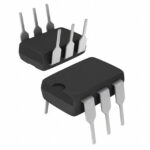 BRT22M
The activity of extra discounts on wholesale prices is in full swing…
Please fill in your contact information and we will send you the latest wholesale price list.





