 ChipApex | Global Electronic Components Supplier
SEARCH
Search Product
Search Post
— IC芯片 | 连接器 | 传感器 | 被动器件 —
Search productSearch post
— IC芯片 | 连接器 | 传感器 | 被动器件 —
Consult the customer manager about the wholesale price.
consultation hotline:86-132-6715-2157
email:[email protected]
Contact the product manager for consultation. One-stop consultation is available.
Do you want a lower wholesale price? Please send us your inquiry and we will reply immediately.
The BU21072MUV-E2 is a capacitive sensor controller IC designed for switch operation, supporting both simple and matrix configurations. It features 10 capacitive sensor ports and supports up to 16 matrix switches. The device operates on a single power supply ranging from 3.0V to 5.5V with a typical operating current of 3.5mA. It includes an integrated LED controller with PWM functionality for brightness control. Communication with the host is handled via a 2-wire serial bus interface compatible with the I2C protocol, utilizing a slave address of 0x5C. The IC provides automatic self-calibration to maintain detection stability against noise and temperature drift.
Verify component authenticity through authorized distributors or direct manufacturer channels. Confirm package integrity and pin alignment prior to assembly. Ensure storage conditions adhere to specified limits to prevent degradation. Cross-reference ordering information with official datasheets to confirm revision levels and compliance standards before finalizing procurement orders.
Select this component for designs requiring capacitive touch sensing with integrated LED control capabilities. Verify that the host system supports the required 2-wire serial interface protocol. Ensure the power supply voltage remains within the 3.0V to 5.5V range. Consider the VQFN-24 package dimensions for PCB layout constraints and thermal management requirements during the design phase.
The BU21072MUV-E2 belongs to ROHM Semiconductor's capacitive controller IC series, specifically designed for switch operations. It shares functional similarities with the BU21078MUV and BU21078FV models, differing primarily in the number of supported sensor ports and matrix switch capacity. This series integrates analog front-end processing, ADC, and MPU functions into a single monolithic silicon chip.
BU21078MUV offers similar functionality but supports 12 sensor ports and up to 36 matrix switches. Check pin compatibility and register map differences when substituting. No other direct replacements are documented in the provided source material.
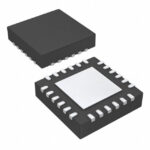 BU21072MUV-E2
The activity of extra discounts on wholesale prices is in full swing…
Please fill in your contact information and we will send you the latest wholesale price list.





