 ChipApex | Global Electronic Components Supplier

SEARCH
Search Product
Search Post
— IC芯片 | 连接器 | 传感器 | 被动器件 —
Search productSearch post
— IC芯片 | 连接器 | 传感器 | 被动器件 —
Consult the customer manager about the wholesale price.
consultation hotline:86-132-6715-2157
email:[email protected]
Contact the product manager for consultation. One-stop consultation is available.
Do you want a lower wholesale price? Please send us your inquiry and we will reply immediately.
The BU4312G-TR is a CMOS low voltage detector manufactured by ROHM Semiconductor, designed for monitoring single-channel power supply voltages. It features an adjustable reset delay timer and operates within a supply voltage range of 0.7 V to 7 V. The typical under-voltage detection threshold is set at 1.2 V with a precision of ±1%. The device draws a maximum operating current of 550 nA and supports an adjustable delay circuit resistance up to 10 MΩ. It is housed in an SSOP-5 package and functions reliably across a temperature range of -40°C to +125°C.
Verify the obsolete status of this component before procurement, as it is marked Not Recommended for New Designs (NRND). Confirm availability through authorized distributors or secondary markets. Ensure the SSOP-5 package matches your PCB footprint requirements. Check RoHS compliance documentation if required for specific regulatory standards. Validate that the adjustable delay configuration meets your system timing specifications.
Select this component when a fixed threshold voltage detector does not meet the specific application requirements. The adjustable delay feature offers flexibility for managing reset pulse widths in noisy environments. Consider the low operating current for energy-sensitive designs. Verify that the 7 V maximum supply voltage aligns with the target power rail. Evaluate the need for manual reset functionality, which is absent in this model.
This part belongs to the BU42(43)xxG series of voltage detectors from ROHM Semiconductor. It shares architectural similarities with other members of the family but is distinguished by its specific 1.2 V detection threshold and adjustable delay capabilities. The series is designed for general-purpose power supply monitoring in consumer and industrial electronics.
The BD5212G-1TR is listed as a recommended replacement with the same pinout and package. Verify electrical parameter compatibility, particularly regarding output drive strength and delay circuit implementation, before substituting.
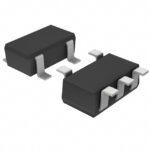 BU4312G-TR

The activity of extra discounts on wholesale prices is in full swing…
Please fill in your contact information and we will send you the latest wholesale price list.





