ChipApex | Global Electronic Components Supplier

SEARCH
Search Product
Search Post
— IC芯片 | 连接器 | 传感器 | 被动器件 —
Search productSearch post
— IC芯片 | 连接器 | 传感器 | 被动器件 —
Consult the customer manager about the wholesale price.
consultation hotline:86-132-6715-2157
email:[email protected]
Contact the product manager for consultation. One-stop consultation is available.
Do you want a lower wholesale price? Please send us your inquiry and we will reply immediately.
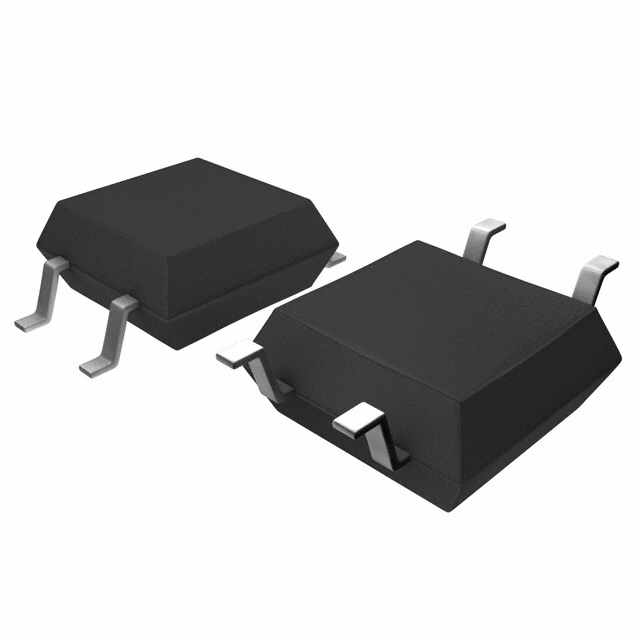
The BU4323F-TR is a CMOS voltage detector IC from ROHM Semiconductor, designed for monitoring single-input power supply voltages. It features an adjustable reset delay timer and operates within a supply voltage range of 0.7 V to 7 V. The device detects under-voltage conditions with a typical threshold of 2.3 V and offers high accuracy of ±1%. It consumes low static current, typically 400 nA at the detection voltage, and supports an operating temperature range from -40°C to +125°C. The component is housed in a compact SOP4 package.
Verify the specific suffix and packaging configuration against the official datasheet before ordering. Confirm that the SOP4 package dimensions match your PCB footprint requirements. Ensure the adjustable delay circuit components are selected according to the manufacturer's application guidelines to achieve the desired timing characteristics. Check for any recent lifecycle status updates such as NRND or last-time buy notices.
Select this component when a single-channel voltage monitor with adjustable delay is required. Compare the 2.3 V threshold against system brown-out requirements. Consider the SOP4 package size constraints relative to available board space. Evaluate the CMOS output drive capability against load requirements. Verify compatibility with the target operating temperature range for the intended application environment.
This part belongs to the BU43xx series of low-voltage detectors from ROHM. It shares functional similarities with other members like the BU4321F and BU4340G, differing primarily in detection thresholds and package options. The series is characterized by low current consumption and flexible delay settings, targeting portable and battery-operated electronics where power efficiency is critical.
The BD5223G-1 is listed as a same-pinout replacement option. Note that the BD5223G-1 uses an SSOP5 package instead of SOP4, requiring layout adaptation. Verify electrical parameter compatibility, particularly output type differences (CMOS vs. Open Drain) and current specifications, before substituting.
 BU4323F-TR

The activity of extra discounts on wholesale prices is in full swing…
Please fill in your contact information and we will send you the latest wholesale price list.