ChipApex | Global Electronic Components Supplier

SEARCH
Search Product
Search Post
— IC芯片 | 连接器 | 传感器 | 被动器件 —
Search productSearch post
— IC芯片 | 连接器 | 传感器 | 被动器件 —
Consult the customer manager about the wholesale price.
consultation hotline:86-132-6715-2157
email:[email protected]
Contact the product manager for consultation. One-stop consultation is available.
Do you want a lower wholesale price? Please send us your inquiry and we will reply immediately.
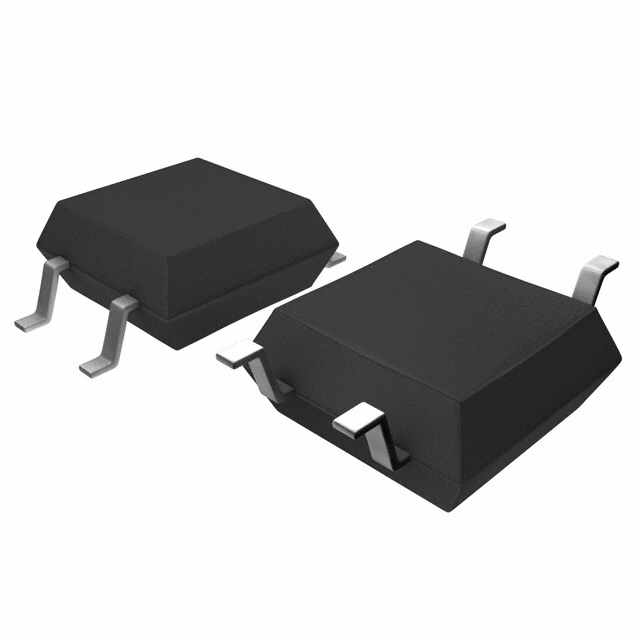
The BU4326F-TR is a CMOS voltage detector manufactured by ROHM Semiconductor, designed for monitoring single-input power supply voltages. It operates within a supply voltage range of 0.7 V to 7 V and features an adjustable reset delay timer. The device provides a typical under-voltage detection threshold of 2.6 V with a precision of ±1%. It consumes a maximum operating current of 550 nA and supports a reset active state of Low. The component is housed in an SOP-4 package and functions reliably across a temperature range of -40°C to +125°C.
Verify the specific suffix and packaging configuration against official datasheets before procurement. Confirm that the intended application environment falls within the specified operating temperature and voltage limits. Check for any regional distribution restrictions or end-of-life status updates from the manufacturer to ensure long-term availability and compliance with project requirements.
Select this component when a single-channel voltage monitor with adjustable timing is required. Ensure the input voltage does not exceed the maximum rating of 7 V. Consider the SOP-4 package constraints for PCB layout. Verify that the CMOS output drive capability meets the load requirements of the connected microcontroller or logic gate without additional buffering.
This part belongs to the BU42(43)xxF series of supervisory circuits from ROHM Semiconductor. It is specifically engineered for applications demanding low quiescent current and high detection accuracy. The SOP-4 package variant offers a compact footprint suitable for space-constrained designs while maintaining robust performance across industrial temperature ranges.
The BD5226G-1 is listed as a similar specification replacement with the same pinout. Note that the BD5226G-1 uses an SSOP-5 package and an open-drain output, which may require circuit adjustments compared to the CMOS output of the BU4326F-TR.
No, the BU4326F-TR does not feature a manual reset pin; it relies solely on automatic voltage detection for triggering resets.
The hysteresis voltage is typically defined as VDET multiplied by 0.05, providing noise immunity during voltage transitions.
 BU4326F-TR

The activity of extra discounts on wholesale prices is in full swing…
Please fill in your contact information and we will send you the latest wholesale price list.