 ChipApex | Global Electronic Components Supplier

SEARCH
Search Product
Search Post
— IC芯片 | 连接器 | 传感器 | 被动器件 —
Search productSearch post
— IC芯片 | 连接器 | 传感器 | 被动器件 —
Consult the customer manager about the wholesale price.
consultation hotline:86-132-6715-2157
email:[email protected]
Contact the product manager for consultation. One-stop consultation is available.
Do you want a lower wholesale price? Please send us your inquiry and we will reply immediately.
The BU4347G-TR is a CMOS voltage detector with an adjustable delay time, manufactured by ROHM Semiconductor. It features a typical under-voltage detection threshold of 4.7V with ±1% precision. The reset active voltage range spans from 0.7V to 7V, and the output type is CMOS with a low active state. Circuit current consumption is 0.40μA (ON) and 0.55μA (OFF) at VDET=4.8V. Hysteresis is set at VDET x 0.05. L output currents are 3.3mA (LowVol) and 6.5mA (HighVol). The delay circuit resistance is 10.0MΩ. Operating temperature ranges from -40°C to 125°C. The package is SSOP5.
Verify component authenticity through authorized distributors or direct manufacturer channels. Confirm RoHS compliance status as indicated in official documentation. Check for end-of-life notices since this part is not recommended for new designs. Ensure storage conditions meet semiconductor handling standards to prevent damage during procurement and transit phases.
Consider the BU4347G-TR for applications requiring precise voltage monitoring with adjustable reset delays. Evaluate compatibility with system voltage levels within the 0.7V to 7V range. Assess current consumption requirements against the specified 0.40μA and 0.55μA values. Verify that the SSOP5 package fits the design constraints. Note that newer alternatives like BD5247G-1 may be preferred for new projects due to updated recommendations.
The BU4347G-TR belongs to ROHM's BU43xxG series of voltage detectors. These components are designed for supervisory applications in consumer electronics and industrial equipment. The series offers various detection thresholds and output configurations. This specific model provides adjustable delay capabilities, distinguishing it from fixed-delay variants. It is part of ROHM's portfolio of low-power PMIC solutions.
The BD5247G-1 is listed as a replacement with the same pinout and package. It offers similar detection voltage but different output types and current specifications. Verify functional compatibility before substitution, especially regarding output drive capability and delay adjustment methods.
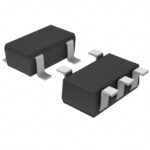 BU4347G-TR

The activity of extra discounts on wholesale prices is in full swing…
Please fill in your contact information and we will send you the latest wholesale price list.





