 ChipApex | Global Electronic Components Supplier
SEARCH
Search Product
Search Post
— IC芯片 | 连接器 | 传感器 | 被动器件 —
Search productSearch post
— IC芯片 | 连接器 | 传感器 | 被动器件 —
Consult the customer manager about the wholesale price.
consultation hotline:86-132-6715-2157
email:[email protected]
Contact the product manager for consultation. One-stop consultation is available.
Do you want a lower wholesale price? Please send us your inquiry and we will reply immediately.
The BU94501AKS2-E2 is a silicon monolithic integrated circuit designed as a USB audio decoder LSI. It integrates a USB host interface, SD card I/F, audio DAC, system controller, and an internal regulator for the core power supply. The device supports WAV, AAC, WMA, and MP3 decoding formats. It operates with a supply voltage range of 3.0 V to 3.6 V and functions within a temperature range of -40°C to +85°C. The component utilizes a SQFP-T52M package containing 52 pins. Electrical characteristics include a typical circuit current of 51.0 mA during USB memory playback and 26.0 mA during SD card playback. It features a sample rate converter that outputs data at 44.1 kHz.
Verify the specific ordering suffix and package type against official documentation before procurement. Confirm compatibility with required audio formats and interface protocols. Ensure the design accounts for the specified operating temperature range and power supply requirements. Check for any licensing requirements related to supported codecs if applicable to the final product implementation.
Select this model when USB host functionality and SD card support are required in a single chip solution. Consider the SQFP-T52M package dimensions for PCB layout constraints. Verify that the target application does not require iPod support, as this variant does not support it. Ensure the master microcomputer can communicate via the I2C slave interface for command control.
This component belongs to the BU9450xAxxx series of USB Audio Decoder LSIs manufactured by ROHM Semiconductor. The series includes variants with different packages and iPod support levels. The AKS2 designation specifically refers to the SQFP-T52M package version which lacks iPod automatic enumeration support compared to other series members.
BU94502AKS2 offers similar functionality but includes iPod support and requires Apple licensing. BU94501AMUV provides the same feature set but uses a VQFN040V6060 package instead of SQFP-T52M. Verify pinout and thermal dissipation differences when substituting these models.
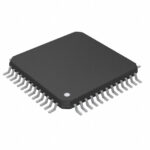 BU94501AKS2-E2
The activity of extra discounts on wholesale prices is in full swing…
Please fill in your contact information and we will send you the latest wholesale price list.





