 ChipApex | Global Electronic Components Supplier

SEARCH
Search Product
Search Post
— IC芯片 | 连接器 | 传感器 | 被动器件 —
Search productSearch post
— IC芯片 | 连接器 | 传感器 | 被动器件 —
Consult the customer manager about the wholesale price.
consultation hotline:86-132-6715-2157
email:[email protected]
Contact the product manager for consultation. One-stop consultation is available.
Do you want a lower wholesale price? Please send us your inquiry and we will reply immediately.
The BUK7C08-55AITE is an N-channel TrenchPLUS standard level FET utilizing TrenchMOS technology. It features a D2PAK (SOT427) package with seven leads, including Kelvin source and mounting base connections. Key electrical parameters include a drain-source voltage of 55 V, continuous drain current up to 130 A at 25 °C, and a maximum on-state resistance of 6.8 mΩ at 50 A. The device integrates a temperature sense diode and ESD protection diodes, supporting junction temperatures up to 175 °C.
Verify the specific ordering suffix matches the required package variant. Confirm compliance with automotive qualification standards relevant to your application environment. Check the latest product status on the manufacturer website as specifications may change. Ensure thermal management design accounts for the specified power dissipation limits at operating temperatures.
Select this component for high-current automotive applications requiring integrated diagnostics. The inclusion of current sensing and temperature monitoring simplifies system architecture by reducing external components. Evaluate the thermal resistance characteristics against your heat sink or PCB footprint constraints to ensure reliable operation under peak load conditions.
This part belongs to Nexperia's TrenchPLUS series of N-channel MOSFETs designed for automotive critical applications. It utilizes advanced TrenchMOS technology to achieve high performance in a compact plastic surface-mounted package. The series is qualified to AEC-Q101 standards, ensuring reliability in demanding environments.
Direct substitutes are not explicitly listed in the provided datasheet. Engineers should evaluate other Nexperia TrenchPLUS devices with matching voltage, current, and package specifications. Verify pinout compatibility and thermal characteristics before substitution.
The integrated temperature sense diode allows for responsive monitoring of the junction temperature, enabling thermal protection and management within the circuit.
The integrated current sensor reduces the overall component count by eliminating the need for external shunt resistors or Hall effect sensors for current monitoring.
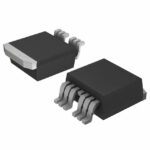 BUK7C08-55AITE,118

The activity of extra discounts on wholesale prices is in full swing…
Please fill in your contact information and we will send you the latest wholesale price list.





