ChipApex | Global Electronic Components Supplier
SEARCH
Search Product
Search Post
— IC芯片 | 连接器 | 传感器 | 被动器件 —
Search productSearch post
— IC芯片 | 连接器 | 传感器 | 被动器件 —
Consult the customer manager about the wholesale price.
consultation hotline:86-132-6715-2157
email:[email protected]
Contact the product manager for consultation. One-stop consultation is available.
Do you want a lower wholesale price? Please send us your inquiry and we will reply immediately.
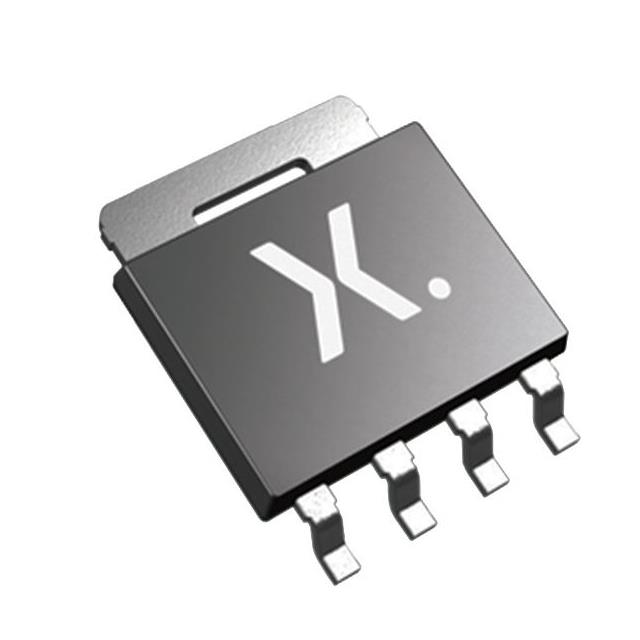
The BUK7Y65-100EX is an N-channel standard level MOSFET utilizing TrenchMOS technology, housed in an LFPAK56 (Power SO8) package. It features a drain-source voltage of 100 V and a continuous drain current of 19 A at 25 °C mounting base temperature. The device exhibits a typical on-state resistance of 44 mΩ at VGS = 10 V and ID = 5 A. Total power dissipation reaches 64 W under specified conditions. The component supports junction temperatures up to 175 °C and includes repetitive avalanche rating capabilities.
Verify the specific suffix 'EX' against the manufacturer's official documentation to confirm packaging details such as reel specifications or tape-and-reel dimensions. Ensure the ordering code matches the exact LFPAK56 variant required for your PCB footprint. Cross-reference the datasheet revision date to confirm the most current electrical parameters and thermal characteristics are applied to your design.
Select this component when designing for automotive environments requiring robust thermal performance and AEC-Q101 compliance. The LFPAK56 package offers efficient heat dissipation suitable for mounting base temperatures up to 100 °C. Consider the 44 mΩ on-resistance for efficiency calculations in 12 V to 48 V systems. Verify that the gate drive voltage aligns with the standard level gate requirements for optimal conduction.
This part belongs to Nexperia's BUK7Y series of N-channel MOSFETs designed for automotive use. The series employs TrenchMOS technology to achieve low on-state resistance within the compact LFPAK56 package. These devices are engineered to meet the rigorous reliability standards required for modern vehicle electronics, providing a balance of electrical performance and thermal management.
Consult the official Nexperia replacement guide for verified cross-references. Direct substitutes must match the 100 V rating, LFPAK56 package, and AEC-Q101 qualification. Generic replacements may lack the specific avalanche ruggedness or thermal characteristics defined in the original datasheet.
 BUK7Y65-100EX
The activity of extra discounts on wholesale prices is in full swing…
Please fill in your contact information and we will send you the latest wholesale price list.