ChipApex | Global Electronic Components Supplier
SEARCH
Search Product
Search Post
— IC芯片 | 连接器 | 传感器 | 被动器件 —
Search productSearch post
— IC芯片 | 连接器 | 传感器 | 被动器件 —
Consult the customer manager about the wholesale price.
consultation hotline:86-132-6715-2157
email:[email protected]
Contact the product manager for consultation. One-stop consultation is available.
Do you want a lower wholesale price? Please send us your inquiry and we will reply immediately.
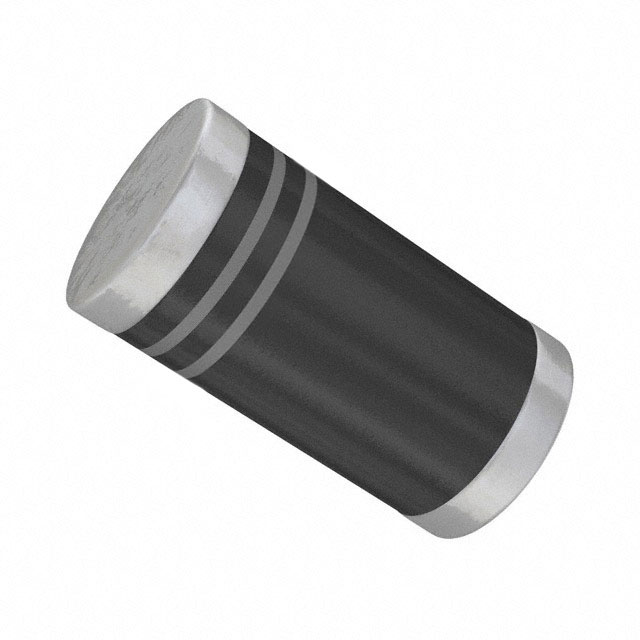
The BYM13-20-E3/97 is a surface mount Schottky barrier rectifier manufactured by Vishay General Semiconductor. It features a GL41 (DO-213AB) MELF case and operates with a maximum average forward rectified current of 1.0 A and a peak forward surge current of 30 A. The device supports a maximum repetitive peak reverse voltage of 20 V and a maximum DC blocking voltage of 20 V. Electrical characteristics include a maximum instantaneous forward voltage of 0.50 V at 1.0 A and a typical junction capacitance of 110 pF at 4.0 V and 1.0 MHz. Thermal resistance from junction to terminal is 30 °C/W, while the junction-to-ambient thermal resistance is 75 °C/W.
Verify that the ordering suffix /97 corresponds to the 13-inch diameter plastic tape and reel delivery mode with a base quantity of 5000 units. Confirm compliance with RoHS standards and JESD 201 class 1A whisker test requirements associated with the E3 suffix. Ensure the component meets the specified environmental standards before integration into production.
Select this component when a single Schottky rectifier in a DO-213AB package is required for low voltage applications. The 20 V rating suits circuits where the maximum repetitive peak reverse voltage does not exceed this limit. Consider the 1.0 A continuous current rating and 30 A surge capability for load conditions. Verify thermal management needs against the 75 °C/W junction-to-ambient resistance.
This part belongs to the BYM13 series of surface mount Schottky barrier rectifiers. The series includes variants with different voltage ratings such as 30 V, 40 V, 50 V, and 60 V. All devices share the same GL41 (DO-213AB) mechanical case and general electrical architecture, differing primarily in their maximum repetitive peak reverse voltage specifications.
Cross-reference with other Vishay BYM13 series parts like BYM13-30 or BYM13-40 if higher voltage ratings are acceptable. Verify that alternative Schottky diodes in the DO-213AB package match the 1.0 A current and 20 V reverse voltage requirements.
Two bands indicate the cathode end. The first band denotes the device type, and the second band denotes the voltage type.
Yes, the datasheet states it is ideal for automated placement due to its MELF Schottky rectifier design.
 BYM13-20-E3/97
The activity of extra discounts on wholesale prices is in full swing…
Please fill in your contact information and we will send you the latest wholesale price list.