ChipApex | Global Electronic Components Supplier
SEARCH
Search Product
Search Post
— IC芯片 | 连接器 | 传感器 | 被动器件 —
Search productSearch post
— IC芯片 | 连接器 | 传感器 | 被动器件 —
Consult the customer manager about the wholesale price.
consultation hotline:86-132-6715-2157
email:[email protected]
Contact the product manager for consultation. One-stop consultation is available.
Do you want a lower wholesale price? Please send us your inquiry and we will reply immediately.
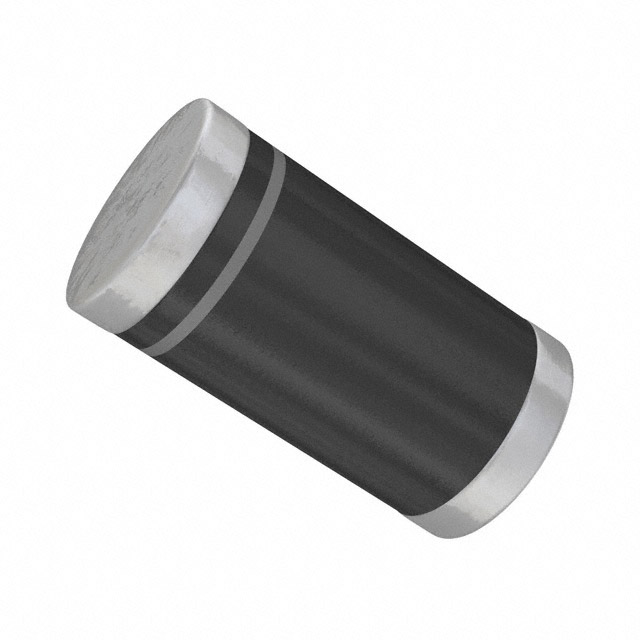
The BYM13-50HE3_A/H is a silicon Schottky rectifier from Vishay Semiconductors, housed in the DO-213AB MELF package. It features a single configuration with a maximum repetitive peak reverse voltage of 50 V and an average forward current rating of 1 A. The device supports a forward surge current of 30 A and exhibits a typical forward voltage drop of 700 mV at rated current. Reverse leakage current is specified at 500 uA. The component operates within a junction temperature range of -55 °C to +150 °C.
Verify the specific suffix against official Vishay documentation to confirm exact packaging and reel specifications. Ensure the part number matches the required voltage and current ratings for your circuit design. Cross-reference datasheet revisions to confirm compliance with current RoHS directives and material declarations before finalizing procurement orders.
Select this component when a low-profile MELF package is required for space-constrained designs. The 50 V rating suits applications with moderate reverse voltage stress. Consider the 1 A current limit and thermal management requirements for the intended load. Compare performance metrics against alternative Schottky diodes if lower forward voltage or higher current capacity is necessary.
This device belongs to the BYM13 series of surface-mount Schottky rectifiers. The series offers various voltage ratings to accommodate different circuit requirements while maintaining consistent package dimensions. Vishay utilizes this platform to provide reliable rectification solutions for consumer electronics and industrial power supplies.
Check for direct substitutes within the BYM13 series with matching voltage ratings. Verify pinout compatibility and thermal characteristics when considering alternatives from other manufacturers. Ensure any replacement meets the same environmental and reliability standards required by the original design.
The maximum operating junction temperature is +150 °C.
It uses the DO-213AB MELF surface-mount package.
 BYM13-50HE3_A/H
The activity of extra discounts on wholesale prices is in full swing…
Please fill in your contact information and we will send you the latest wholesale price list.