ChipApex | Global Electronic Components Supplier
SEARCH
Search Product
Search Post
— IC芯片 | 连接器 | 传感器 | 被动器件 —
Search productSearch post
— IC芯片 | 连接器 | 传感器 | 被动器件 —
Consult the customer manager about the wholesale price.
consultation hotline:86-132-6715-2157
email:[email protected]
Contact the product manager for consultation. One-stop consultation is available.
Do you want a lower wholesale price? Please send us your inquiry and we will reply immediately.
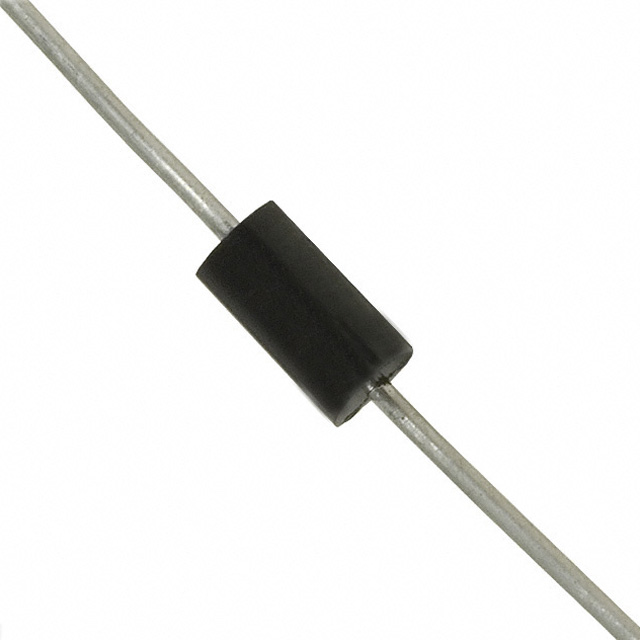
The BYT01-400RL is a high-efficiency ultrafast diode manufactured by STMicroelectronics, utilizing 400V planar technology. It features a DO-15 axial package and is designed for switching mode base drive and transistor circuits. Key electrical parameters include a repetitive peak reverse voltage (VRRM) of 400 V, an average forward current (IF(AV)) of 1 A at 80°C, and a maximum junction temperature of 150 °C. The device exhibits low conduction losses and negligible switching losses, with a maximum reverse recovery time (trr) of 25 ns and a forward voltage drop (VF) of up to 1.4 V at 100°C.
Verify the specific ordering code BYT01-400RL against the datasheet to confirm the Tape & Reel delivery mode and 6000 unit base quantity. Ensure that the component's absolute maximum ratings, particularly the 150 °C junction temperature limit and 30 A non-repetitive surge current capability, align with the target application's thermal and electrical stress requirements before finalizing procurement.
Select this component for designs requiring fast recovery speeds and low reverse leakage current. Consider the DO-15 package dimensions and lead length when calculating thermal resistance, as junction-to-ambient thermal resistance varies significantly with lead length. Evaluate the forward recovery voltage and peak reverse recovery current under expected dI/dt conditions to ensure compatibility with the switching frequency and load dynamics.
The BYT01-400 is part of STMicroelectronics' range of high-efficiency ultrafast diodes. These devices are engineered using proprietary planar technology to minimize energy loss during switching transitions. The product line targets applications where rapid turn-off capabilities and robust avalanche characteristics are critical for system efficiency and reliability.
No public confirmed substitute part numbers are available in the provided documentation.
The maximum operating junction temperature is 150 °C.
The junction-to-ambient thermal resistance decreases as the lead length increases, allowing for better heat dissipation through conduction along the leads.
 BYT01-400RL
The activity of extra discounts on wholesale prices is in full swing…
Please fill in your contact information and we will send you the latest wholesale price list.