ChipApex | Global Electronic Components Supplier
SEARCH
Search Product
Search Post
— IC芯片 | 连接器 | 传感器 | 被动器件 —
Search productSearch post
— IC芯片 | 连接器 | 传感器 | 被动器件 —
Consult the customer manager about the wholesale price.
consultation hotline:86-132-6715-2157
email:[email protected]
Contact the product manager for consultation. One-stop consultation is available.
Do you want a lower wholesale price? Please send us your inquiry and we will reply immediately.
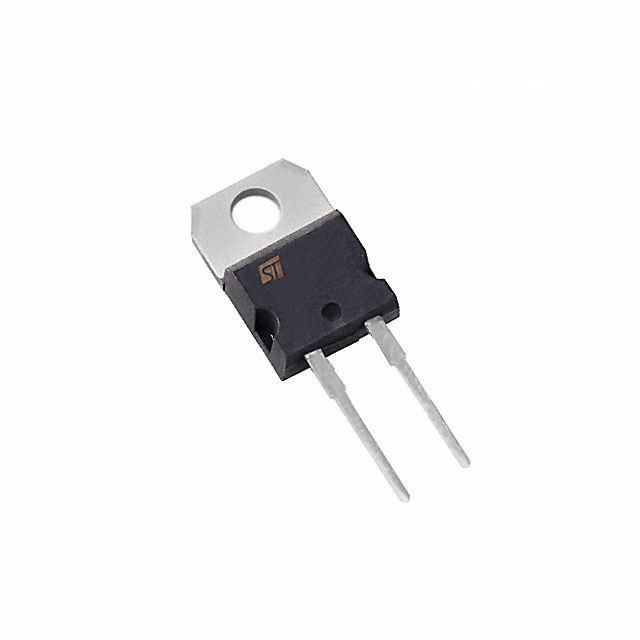
The BYT12PI-1000 is a fast recovery rectifier diode manufactured by STMicroelectronics, designed for high voltage and low noise applications. It features a repetitive peak reverse voltage of 1000 V and an average forward current rating of 12 A at a case temperature of 50°C. The device exhibits a very low reverse recovery time of 155 ns typical value under specified conditions. Packaged in an isolated TO-220AC plastic housing with 2500 VRMS insulation capability, it offers low switching losses and low noise turn-off switching characteristics suitable for demanding power conversion environments.
Verify component authenticity through authorized channels as the part is marked obsolete. Confirm specific lot dates and packaging details directly with suppliers. Ensure thermal management solutions align with the specified junction-to-case thermal resistance. Check for any updated replacement recommendations from the manufacturer before finalizing procurement plans.
Select this component for applications requiring high reverse voltage blocking and fast recovery characteristics. Consider the 12 A average current rating and 25 W power dissipation limits when designing thermal paths. The insulated TO-220AC package is suitable where galvanic isolation between the heatsink and circuit ground is required. Evaluate the 155 ns reverse recovery time against system switching frequency requirements.
This device belongs to the BYT series of fast recovery rectifiers from STMicroelectronics. It utilizes planar technology to achieve high reliability and consistent performance. The TO-220AC package provides mechanical robustness and effective heat dissipation via conduction. The product line is engineered for industrial and consumer power electronics applications demanding durability.
The datasheet explicitly marks the BYT12PI-1000 as an obsolete product. Engineers should consult official STMicroelectronics documentation for current recommended replacements or alternative devices within the same voltage and current class that maintain similar recovery and isolation specifications.
 BYT12PI-1000
The activity of extra discounts on wholesale prices is in full swing…
Please fill in your contact information and we will send you the latest wholesale price list.