ChipApex | Global Electronic Components Supplier
SEARCH
Search Product
Search Post
— IC芯片 | 连接器 | 传感器 | 被动器件 —
Search productSearch post
— IC芯片 | 连接器 | 传感器 | 被动器件 —
Consult the customer manager about the wholesale price.
consultation hotline:86-132-6715-2157
email:[email protected]
Contact the product manager for consultation. One-stop consultation is available.
Do you want a lower wholesale price? Please send us your inquiry and we will reply immediately.
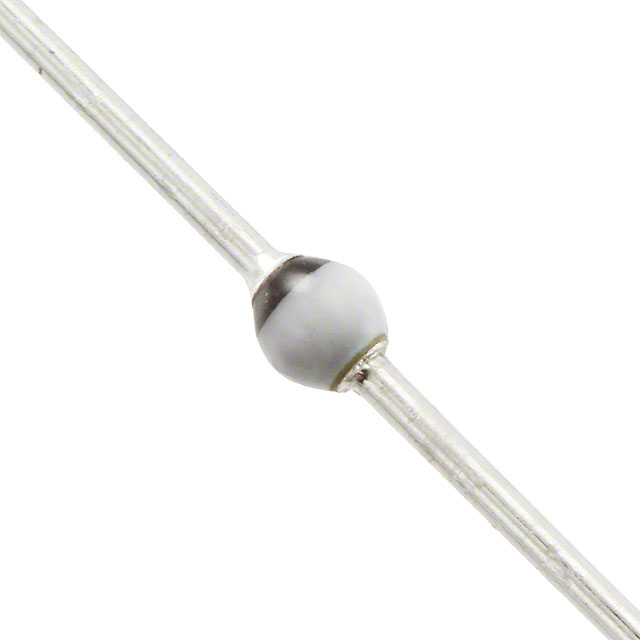
The BYT56D-TR is a single avalanche rectifier diode manufactured by Vishay General Semiconductor - Diodes Division. It features a maximum repetitive peak reverse voltage of 200 V and an average forward rectified current of 3 A. The device utilizes the SOD-64 through-hole axial package. Key electrical parameters include a maximum forward voltage of 1.4 V at 3 A, a reverse leakage current of 5 µA at 1000 V, and a fast recovery time of less than or equal to 500 ns for currents greater than 200 mA. The component operates within a junction temperature range of -55°C to 175°C.
Verify the specific suffix 'D' against the official Vishay datasheet to confirm the 200V rating, as other variants in the BYT56 series may differ. Ensure the ordering part number matches the exact package style and tape/reel configuration required for your assembly process. Cross-reference the manufacturer's latest documentation to confirm compliance with current RoHS directives and material declarations before finalizing procurement.
Select this component when a 200V blocking capability and 3A continuous current rating are required in a compact axial leaded format. The fast recovery specification makes it suitable for higher frequency applications compared to standard rectifiers. Consider the avalanche rating if the application involves significant inductive kickback or transient voltage events that exceed standard breakdown limits.
The BYT56D-TR belongs to the BYT56 series of single avalanche rectifiers from Vishay. This series is designed for general-purpose rectification in low to medium power applications. The 'TR' suffix indicates the component is supplied in a tape and reel packaging format, facilitating automated surface mount or through-hole insertion processes depending on the specific machine setup.
Direct substitutes within the same family include BYT56M-TR (1000V) and BYT56D-TAP (tape and box). Verify that the replacement maintains the 200V reverse voltage rating and compatible package dimensions. Ensure the alternative component meets the same fast recovery and avalanche energy specifications for equivalent circuit performance.
 BYT56D-TR
The activity of extra discounts on wholesale prices is in full swing…
Please fill in your contact information and we will send you the latest wholesale price list.