ChipApex | Global Electronic Components Supplier
SEARCH
Search Product
Search Post
— IC芯片 | 连接器 | 传感器 | 被动器件 —
Search productSearch post
— IC芯片 | 连接器 | 传感器 | 被动器件 —
Consult the customer manager about the wholesale price.
consultation hotline:86-132-6715-2157
email:[email protected]
Contact the product manager for consultation. One-stop consultation is available.
Do you want a lower wholesale price? Please send us your inquiry and we will reply immediately.
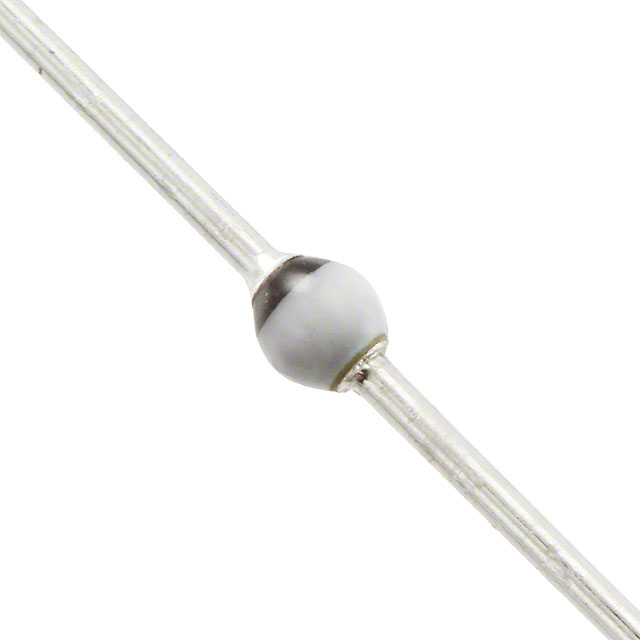
The BYT56M-TR is a fast avalanche sinterglass diode manufactured by Vishay Semiconductors. It features a glass passivated junction and hermetically sealed SOD-64 package. Key electrical parameters include a repetitive peak reverse voltage of 1000 V, an average forward current of 3 A at 25 °C with 10 mm leads, and a maximum forward surge current of 80 A. The device exhibits a typical reverse recovery time of 100 ns and a maximum forward voltage of 1.4 V at 3 A. Operating temperature range spans from -55 °C to +175 °C.
Verify the specific ordering code BYT56M-TR against the datasheet to confirm the 1000 V rating and SOD-64 package. Confirm minimum order quantities match the specified tape and reel units. Ensure compliance requirements are met as defined in the material categorization documentation provided by the manufacturer.
Select this component when a 1000 V blocking capability is required alongside fast recovery performance. The SOD-64 through-hole package suits designs needing robust mechanical mounting. Consider the 80 A surge rating for inductive switching environments. Verify thermal resistance constraints based on lead length and PCB spacing for the specific application.
This part belongs to the BYT56 series of fast avalanche sinterglass diodes from Vishay Semiconductors. The series includes variants with different reverse voltage ratings (50 V to 800 V) sharing the same SOD-64 package and general electrical structure. The 'M' suffix specifically denotes the 1000 V breakdown voltage variant within this family.
Direct substitutes within the same Vishay series include BYT56K (800 V) or BYT56J (600 V) if lower voltage ratings are acceptable. Cross-manufacturer replacements must match the 1000 V reverse voltage, 3 A forward current, and SOD-64 package dimensions.
The maximum non-repetitive reverse avalanche energy is 10 mJ when tested at a reverse current of 0.4 A.
When mounted on a PC board, the average forward current rating decreases to 1.5 A, compared to 3 A with 10 mm lead length.
The typical reverse recovery time is 100 ns, measured under conditions of IF = 0.5 A, IR = 1 A, and iR = 0.25 A.
 BYT56M-TR
The activity of extra discounts on wholesale prices is in full swing…
Please fill in your contact information and we will send you the latest wholesale price list.