 ChipApex | Global Electronic Components Supplier
SEARCH
Search Product
Search Post
— IC芯片 | 连接器 | 传感器 | 被动器件 —
Search productSearch post
— IC芯片 | 连接器 | 传感器 | 被动器件 —
Consult the customer manager about the wholesale price.
consultation hotline:86-132-6715-2157
email:[email protected]
Contact the product manager for consultation. One-stop consultation is available.
Do you want a lower wholesale price? Please send us your inquiry and we will reply immediately.
The BYV29B-500,118 is a single ultrafast rectifier diode manufactured by WeEn Semiconductors. It features a maximum repetitive reverse voltage of 500 V and an average forward current rating of 9 A. The device exhibits a maximum forward voltage of 1.4 V and a typical reverse recovery time of 60 ns. It supports a forward surge current of 110 A and operates at junction temperatures up to 150°C. The component is housed in a D2PAK (SOT404) surface-mount package with two terminals and a tab.
Verify the specific ordering code suffix, such as ,118, against official manufacturer documentation to confirm the tape and reel packaging configuration. Ensure that the D2PAK footprint requirements align with the target PCB design. Cross-reference the thermal resistance parameters from the datasheet for adequate heat dissipation planning in the final assembly.
Select this component when a fast recovery time of approximately 60 ns is required alongside a 500 V blocking capability. The 9 A current rating suits moderate power applications where space constraints favor surface-mount mounting over through-hole options. Consider the soft recovery feature if EMI reduction is a critical design parameter compared to standard ultrafast alternatives.
This part belongs to the BYV29B series of ultrafast rectifiers from WeEn Semiconductors. The series includes variants with different voltage ratings, such as the BYV29B-600. These devices are designed for high-efficiency applications requiring low reverse recovery charge and fast switching speeds, distinguishing them from standard recovery diodes in similar packages.
Check for direct pin-compatible substitutes within the same voltage and current class. Verify that any alternative device maintains comparable reverse recovery time and forward voltage specifications to ensure circuit performance consistency without redesigning the thermal or layout constraints.
The typical reverse recovery time is 60 ns.
Yes, it utilizes gold doping technology to provide very soft recovery, helping to minimize electromagnetic interference.
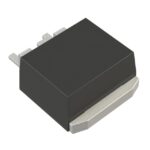 BYV29B-500,118
The activity of extra discounts on wholesale prices is in full swing…
Please fill in your contact information and we will send you the latest wholesale price list.




