 ChipApex | Global Electronic Components Supplier
SEARCH
Search Product
Search Post
— IC芯片 | 连接器 | 传感器 | 被动器件 —
Search productSearch post
— IC芯片 | 连接器 | 传感器 | 被动器件 —
Consult the customer manager about the wholesale price.
consultation hotline:86-132-6715-2157
email:[email protected]
Contact the product manager for consultation. One-stop consultation is available.
Do you want a lower wholesale price? Please send us your inquiry and we will reply immediately.
The Nexperia BZB84-B51-QR is a dual voltage regulator diode in a SOT-23 (TO-236AB) surface-mount package. It features a dual common anode configuration with two independent Zener diodes sharing a single anode terminal. The device provides a nominal working voltage of 51 V with a ±2% tolerance series. Key electrical parameters include a total power dissipation of 300 mW, a non-repetitive peak reverse power dissipation of 40 W per diode, and a maximum forward voltage of 0.9 V at 10 mA. The component operates within a junction temperature range of -55 °C to +150 °C and is qualified according to AEC-Q101 standards.
Verify the specific ordering suffix against official Nexperia documentation to confirm packaging details such as reel or cut tape specifications. Ensure that the selected variant matches the required tolerance grade and package dimensions for your assembly process. Cross-reference the part number with the latest product data sheet to confirm current production status and any potential obsolescence notices before finalizing procurement plans.
Select this component when a dual Zener configuration with a shared anode is required to save board space. The 51 V breakdown voltage suits higher voltage regulation tasks compared to lower voltage alternatives in the same series. Consider the thermal resistance characteristics and total power dissipation limits when designing heat management strategies for dense PCB layouts.
This part belongs to the BZB84-Q series, which offers a comprehensive range of dual Zener diodes with nominal voltages from 2.4 V to 75 V. The series utilizes the standardized SOT-23 plastic package, ensuring compatibility with existing surface-mount manufacturing processes. The B-series designation indicates a tighter ±2% voltage tolerance compared to the C-series, providing greater precision for regulated voltage applications.
Direct replacements within the same family include other BZB84-Q variants with different voltage ratings but identical pinouts and configurations. Verify that any substitute maintains the required ±2% tolerance and AEC-Q101 qualification if automotive reliability is mandatory. Ensure the replacement part supports the necessary current and power dissipation requirements of the original design.
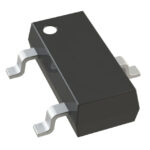 BZB84-B51-QR
The activity of extra discounts on wholesale prices is in full swing…
Please fill in your contact information and we will send you the latest wholesale price list.




