 ChipApex | Global Electronic Components Supplier
SEARCH
Search Product
Search Post
— IC芯片 | 连接器 | 传感器 | 被动器件 —
Search productSearch post
— IC芯片 | 连接器 | 传感器 | 被动器件 —
Consult the customer manager about the wholesale price.
consultation hotline:86-132-6715-2157
email:[email protected]
Contact the product manager for consultation. One-stop consultation is available.
Do you want a lower wholesale price? Please send us your inquiry and we will reply immediately.
The Nexperia BZB84-B6V2-QR is a dual voltage regulator diode in the BZB84-Q series, housed in an SOT-23 surface-mounted package. It features a dual common anode configuration with two independent cathodes. The nominal Zener voltage is 6.2 V with a ±2% tolerance (B series). Key electrical parameters include a maximum total power dissipation of 300 mW, a forward voltage of 0.9 V at 10 mA, and a reverse current of 150 µA at 5 mA test current. It operates within a junction temperature range of -55 °C to +150 °C and is qualified according to AEC-Q101 for automotive applications.
Verify the specific ordering suffix against the manufacturer's latest documentation to ensure correct packaging and tape-and-reel specifications. Confirm that the B-series tolerance aligns with design requirements. Cross-reference the AEC-Q101 qualification status if the application mandates strict automotive reliability standards. Ensure the SOT-23 footprint matches the PCB layout constraints.
Select this component when a dual-channel voltage reference or regulation is required in a minimal footprint. The B-series offers tighter voltage tolerance compared to the C-series. Consider the thermal resistance characteristics and total power dissipation limits when designing for high ambient temperatures. Verify compatibility with standard reflow soldering profiles for the SOT-23 package.
This device belongs to the Nexperia BZB84-Q series, which comprises 74 types of dual voltage regulator diodes ranging from 2.4 V to 75 V. All variants share the same SOT-23 plastic package and dual common anode topology. The series is designed to replace discrete dual-diode solutions, reducing board space and simplifying assembly processes for general-purpose and automotive electronics.
Direct substitutes within the same family include other BZB84-Q series parts with different voltage ratings but identical pinouts and configurations. For single-diode replacements, consider the BZX84-Q series, though pinout and configuration differences must be evaluated carefully.
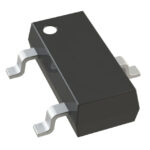 BZB84-B6V2-QR
The activity of extra discounts on wholesale prices is in full swing…
Please fill in your contact information and we will send you the latest wholesale price list.




