 ChipApex | Global Electronic Components Supplier
SEARCH
Search Product
Search Post
— IC芯片 | 连接器 | 传感器 | 被动器件 —
Search productSearch post
— IC芯片 | 连接器 | 传感器 | 被动器件 —
Consult the customer manager about the wholesale price.
consultation hotline:86-132-6715-2157
email:[email protected]
Contact the product manager for consultation. One-stop consultation is available.
Do you want a lower wholesale price? Please send us your inquiry and we will reply immediately.
The Nexperia BZB84-B7V5-QR is a dual voltage regulator diode in a SOT23 surface-mounted package. It features a nominal Zener voltage of 7.5 V with a ±2% tolerance series (B). Key electrical parameters include a maximum reverse current of 15 µA at IZ=5 mA, a differential resistance of 15 Ω, and a temperature coefficient ranging from 2.5 to 5.3 mV/K. The device supports a total power dissipation of 300 mW, operates within a junction temperature range of -55 °C to +150 °C, and carries AEC-Q101 qualification for automotive applications.
Verify the specific suffix 'QR' against the manufacturer's latest documentation to confirm reel packaging specifications and tape-and-reel dimensions. Ensure the ordering code matches the required tolerance grade ('B' for ±2%) rather than the standard 'C' variant. Cross-reference the marking code 'VN%' on the component body to validate authenticity and correct voltage rating upon receipt.
Select this component when a dual-diode solution is required to save board space compared to using two separate single Zener devices. The B-series designation indicates a tighter ±2% voltage tolerance, which is necessary for applications requiring precise reference voltages. Consider the 300 mW total power dissipation limit and the thermal resistance characteristics when designing the PCB footprint for adequate heat dissipation.
This part belongs to the Nexperia BZB84-Q series, which comprises 74 types of dual voltage regulator diodes covering a working voltage range from 2.4 V to 75 V. All members of this series share the same SOT23 plastic package and AEC-Q101 automotive qualification, providing a standardized platform for designers needing multiple regulation points in small form factors.
Direct substitutes within the same family include other BZB84-Q variants with different voltage ratings but identical package and pinout. For single-diode replacements, consider the BZX84-Q series, though this requires accounting for the loss of the second diode function and potential differences in power dissipation ratings.
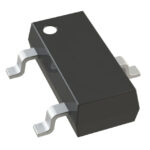 BZB84-B7V5-QR
The activity of extra discounts on wholesale prices is in full swing…
Please fill in your contact information and we will send you the latest wholesale price list.




