 ChipApex | Global Electronic Components Supplier
SEARCH
Search Product
Search Post
— IC芯片 | 连接器 | 传感器 | 被动器件 —
Search productSearch post
— IC芯片 | 连接器 | 传感器 | 被动器件 —
Consult the customer manager about the wholesale price.
consultation hotline:86-132-6715-2157
email:[email protected]
Contact the product manager for consultation. One-stop consultation is available.
Do you want a lower wholesale price? Please send us your inquiry and we will reply immediately.
The BZX84C18S-7-F is a dual surface mount Zener diode manufactured by Diodes Incorporated, housed in an SOT-363 package. It provides two independent Zener diodes with a nominal voltage of 18V and a tolerance range of 16.8V to 19.1V at a test current of 5mA. The device supports a maximum power dissipation of 200mW and operates within a temperature range of -65°C to +150°C. Electrical characteristics include a maximum Zener impedance (ZZT) of 45 Ohms and a maximum reverse leakage current of 0.1µA at 12.6V. The component features matte tin plating and complies with RoHS standards.
Verify the specific ordering suffix against official manufacturer documentation to ensure correct packaging and compliance status. Confirm that the requested part number matches the exact electrical specifications required for the design. Cross-reference the date code and marking information to validate production batch details. Ensure all procurement activities adhere to the manufacturer's life support policy restrictions.
Select this component when a dual Zener solution is required in a space-constrained SOT-363 footprint. Evaluate the thermal resistance and power derating curves to ensure adequate heat dissipation under operating conditions. Compare the Zener impedance and leakage current specifications against circuit requirements to verify signal integrity. Consider the voltage tolerance range to determine if tighter precision variants are necessary for the application.
This component belongs to the BZX84C series of dual surface mount Zener diodes produced by Diodes Incorporated. The series covers a wide voltage range from 2.4V to 39V, offering flexibility for various low-power regulation needs. The SOT-363 package allows for automated assembly and reduced board space compared to discrete single diodes. This specific variant targets applications needing two regulated voltages from a single package.
Direct replacements must match the SOT-363 package, 18V nominal voltage, and dual configuration. Verify that alternative manufacturers provide equivalent Zener impedance and leakage current specifications. Ensure the replacement part maintains the same thermal characteristics and operating temperature range. Check for any differences in marking codes or packaging formats that might affect assembly processes.
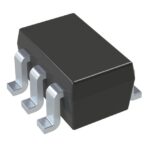 BZX84C18S-7-F
The activity of extra discounts on wholesale prices is in full swing…
Please fill in your contact information and we will send you the latest wholesale price list.




