 ChipApex | Global Electronic Components Supplier
SEARCH
Search Product
Search Post
— IC芯片 | 连接器 | 传感器 | 被动器件 —
Search productSearch post
— IC芯片 | 连接器 | 传感器 | 被动器件 —
Consult the customer manager about the wholesale price.
consultation hotline:86-132-6715-2157
email:[email protected]
Contact the product manager for consultation. One-stop consultation is available.
Do you want a lower wholesale price? Please send us your inquiry and we will reply immediately.
The BZX84C75TW_R1_00001 is a triple isolated surface mount Zener diode manufactured by Panjit International Inc. It operates within a voltage range of 2.4 to 75 Volts and features a power dissipation rating of 200 mWatt. The component utilizes an SOT-363 molded plastic case with terminals solderable per MIL-STD-750 Method 2026. Electrical characteristics include a nominal Zener voltage of 75 V, a maximum Zener impedance (ZZT) of 250 Ohms at IZT = 2.5 mA, and a maximum reverse leakage current of 0.1 uA at VR = 56 V. The device supports an operating junction temperature range from -65 to +150 °C.
Verify the specific ordering suffix against official Panjit documentation to confirm packing type and reel size. The R1 code indicates Tape and Reel packaging on a 7-inch reel. Ensure compliance with the manufacturer's disclaimer regarding high-reliability or life-sustaining applications before procurement.
Select this component when a triple isolated Zener diode in an SOT-363 package is required. Confirm that the 200 mW power dissipation and 75 V nominal voltage align with circuit requirements. Verify thermal resistance constraints and ensure the application does not involve medical or aerospace environments restricted by the manufacturer.
This part belongs to the BZX84C2V4TW~BZX84C75TW series of triple isolated surface mount Zener diodes. The series covers nominal voltages from 2.4 V to 75 V. All variants share the same SOT-363 mechanical footprint and 200 mW power rating, differing primarily in electrical parameters such as Zener voltage, impedance, and leakage current.
Direct substitutes must match the SOT-363 package, triple isolation, and 200 mW rating. Verify equivalent Zener voltage tolerance and impedance specifications. Cross-reference with other manufacturers offering triple Zener arrays in identical form factors.
The maximum reverse leakage current is 0.1 uA, measured at a reverse voltage of 56 V.
No, the R1 suffix only specifies the packing method (Tape and Reel on a 7-inch reel) and does not alter the electrical characteristics.
No, Panjit explicitly states these products are not authorized for use in medical instruments or life-saving applications.
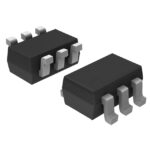 BZX84C75TW_R1_00001
The activity of extra discounts on wholesale prices is in full swing…
Please fill in your contact information and we will send you the latest wholesale price list.




