 ChipApex | Global Electronic Components Supplier
SEARCH
Search Product
Search Post
— IC芯片 | 连接器 | 传感器 | 被动器件 —
Search productSearch post
— IC芯片 | 连接器 | 传感器 | 被动器件 —
Consult the customer manager about the wholesale price.
consultation hotline:86-132-6715-2157
email:[email protected]
Contact the product manager for consultation. One-stop consultation is available.
Do you want a lower wholesale price? Please send us your inquiry and we will reply immediately.
The C161JCLFCABXQMA1 is a 16-bit microcontroller from the Infineon C166 C16xx series. It features a ROMless program memory architecture and an internal oscillator, operating at a maximum speed of 25MHz. The device provides 93 I/O lines and includes 10K x 8 bytes of RAM. It integrates twelve 10-bit analog-to-digital converters and supports multiple communication interfaces including CANbus, SPI, I2C, UART/USART, SLDM, and EBI/EMI. Powered by a 4.5V to 5.5V supply, it operates within a commercial temperature range of 0°C to 70°C and is housed in a 128-lead PG-TQFP package.
Verify component authenticity through authorized distributors as this part is marked as obsolete. Confirm package integrity upon receipt, specifically checking for lead coplanarity on the 128-LQFP variant. Ensure handling procedures comply with MSL Level 3 moisture sensitivity requirements. Cross-reference ordering suffixes carefully to match exact pinout and thermal specifications required by your design.
Select this component when a 16-bit C166 core is required with no onboard flash memory. It is suitable for designs needing significant GPIO count and specific analog input channels. Consider the 25MHz clock limit and commercial temperature range during system planning. Evaluate alternative legacy parts if current production availability is critical for long-term manufacturing.
This microcontroller belongs to the established C166 family, widely used in automotive and industrial sectors. It represents a mature technology node focusing on deterministic real-time performance. The C16xx series is known for its efficient instruction set and specialized peripherals for power control. While superseded by newer architectures, it remains relevant for cost-sensitive or legacy-compatible embedded projects.
Public confirmed substitute part numbers are not available due to the obsolete status of this specific model. Engineers should consult official replacement guides for modern equivalents within the XC166 or Aurix families, ensuring compatibility with existing CANbus and peripheral configurations.
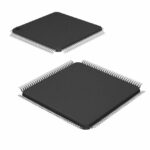 C161JCLFCABXQMA1
The activity of extra discounts on wholesale prices is in full swing…
Please fill in your contact information and we will send you the latest wholesale price list.






