ChipApex | Global Electronic Components Supplier

SEARCH
Search Product
Search Post
— IC芯片 | 连接器 | 传感器 | 被动器件 —
Search productSearch post
— IC芯片 | 连接器 | 传感器 | 被动器件 —
Consult the customer manager about the wholesale price.
consultation hotline:86-132-6715-2157
email:[email protected]
Contact the product manager for consultation. One-stop consultation is available.
Do you want a lower wholesale price? Please send us your inquiry and we will reply immediately.
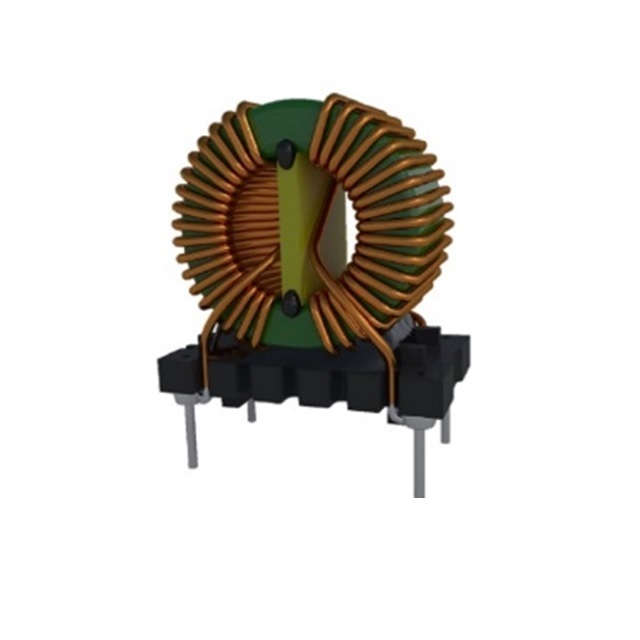
The C201368A-102NHF is a dual common mode choke manufactured by ITG Electronics, Inc. It features an inductance of 1.0 mH measured at 10 kHz with a tolerance of 30%. The component supports a maximum current rating of 11 A and exhibits a direct current resistance (DCR) of 8.5 mOhm. It provides a voltage withstand capability of 1.5 kV and operates within a temperature range of -40°C to +125°C. Designed for through-hole mounting, this two-line filter is suitable for applications requiring robust electromagnetic interference suppression.
Verify the specific manufacturer datasheet for the C201368A-102NHF to confirm all electrical parameters and mechanical dimensions before integration. Ensure that the operating environment remains within the specified -40°C to +125°C temperature range to maintain performance reliability. Cross-reference the 1.5 kV withstand voltage requirement with your system's isolation needs. Confirm that the through-hole footprint matches your printed circuit board design constraints.
Select the C201368A-102NHF when a high-current common mode choke is required for two-line applications. Its 11 A rating makes it suitable for power stages demanding significant current handling. The low DCR of 8.5 mOhm helps minimize power loss. Consider the 1.0 mH inductance value for the target frequency range of noise attenuation. Ensure the through-hole package fits the available assembly space and manufacturing capabilities.
This component belongs to the ITG Electronics common mode choke series, designed for general-purpose EMI filtering. The C201368A-102NHF variant specifically targets applications requiring higher current capacity compared to lower-rated counterparts. It serves as a passive component to suppress unwanted common mode signals in both power and signal lines, contributing to overall system compliance with electromagnetic compatibility standards.
The C201368A-222NHF is a related part from the same manufacturer series. Verify if its different inductance value meets the specific filtering requirements of the application before substitution.
 C201368A-102NHF

The activity of extra discounts on wholesale prices is in full swing…
Please fill in your contact information and we will send you the latest wholesale price list.