 ChipApex | Global Electronic Components Supplier
SEARCH
Search Product
Search Post
— IC芯片 | 连接器 | 传感器 | 被动器件 —
Search productSearch post
— IC芯片 | 连接器 | 传感器 | 被动器件 —
Consult the customer manager about the wholesale price.
consultation hotline:86-132-6715-2157
email:[email protected]
Contact the product manager for consultation. One-stop consultation is available.
Do you want a lower wholesale price? Please send us your inquiry and we will reply immediately.
The C505CA4EMCABXUMA1 is an 8-bit microcontroller from the Infineon C500 family, based on a superset of the standard 8051 architecture. It features up to 20 MHz operating frequency with instruction cycle times of 375 ns at 16 MHz and 300 ns at 20 MHz. The device includes 32 Kbyte of one-time programmable (OTP) memory, 256 bytes of internal RAM, and 1 Kbyte of XRAM. It integrates a full CAN controller compliant with version 2.0 B, an 8-channel 10-bit A/D converter, three 16-bit timers/counters, and a full-duplex USART. The unit provides 32 plus 2 digital I/O lines and operates within a temperature range of -40°C to +125°C.
Verify the specific ordering code against official Infineon documentation to ensure correct package type and delivery format. Confirm that the OTP memory variant matches the required firmware programming constraints. Check for any RoHS compliance status updates or environmental declarations relevant to the manufacturing date code. Ensure compatibility with existing design-in tools and ICE-systems utilizing Enhanced Hooks technology.
Select this component when a robust 8-bit solution with integrated CAN communication is required for automotive or industrial environments. The C505CA offers a balance of processing speed and peripheral integration suitable for applications needing fast response times. Consider the OTP memory limitation if frequent field updates are anticipated, as it cannot be reprogrammed like EEPROM variants.
This part belongs to the C500 family of 8-bit single-chip microcontrollers produced by Infineon Technologies. The C505CA derivative specifically enhances the base C500 architecture by adding a full CAN module and increasing the XRAM size to 1 Kbyte compared to earlier versions. It serves as a bridge between standard 8051 compatibility and advanced automotive networking requirements.
Direct substitutes include other C505CA variants with different memory types such as ROM (e.g., C505CA-4R). Cross-family migration may require significant architectural changes due to the unique datapointer and register set of the C500 core.
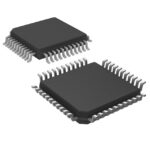 C505CA4EMCABXUMA1
The activity of extra discounts on wholesale prices is in full swing…
Please fill in your contact information and we will send you the latest wholesale price list.






