 ChipApex | Global Electronic Components Supplier
SEARCH
Search Product
Search Post
— IC芯片 | 连接器 | 传感器 | 被动器件 —
Search productSearch post
— IC芯片 | 连接器 | 传感器 | 被动器件 —
Consult the customer manager about the wholesale price.
consultation hotline:86-132-6715-2157
email:[email protected]
Contact the product manager for consultation. One-stop consultation is available.
Do you want a lower wholesale price? Please send us your inquiry and we will reply immediately.
The Wolfspeed C6D16065H is a sixth-generation 650 V, 16 A Silicon Carbide Schottky Barrier diode housed in a TO-247-2 package. It features a maximum repetitive peak reverse voltage of 650 V and a continuous forward current rating of 16 A at a case temperature of 25 °C. The device exhibits a typical forward voltage of 1.3 V at 16 A and 25 °C, with a maximum junction-to-case thermal resistance of 1.09 °C/W. Operating within a junction temperature range of -55 °C to +175 °C, it provides zero reverse recovery charge and temperature-independent switching behavior.
Verify the specific ordering suffix and compliance documentation against the official datasheet before procurement. Confirm that the TO-247-2 package dimensions and mounting torque specifications align with your mechanical design requirements. Ensure that the thermal management solution accommodates the specified junction-to-case thermal resistance values under your intended operating conditions.
Select this component when designing systems requiring high efficiency and reduced cooling requirements compared to silicon solutions. Consider its ability to be easily paralleled without thermal runaway concerns for higher current demands. Evaluate the positive temperature coefficient for stable current sharing in parallel configurations and ensure the application operates within the specified -55 °C to +175 °C junction temperature limits.
This part belongs to Wolfspeed's sixth-generation 650 V Silicon Carbide Schottky diode family. These devices are designed to replace traditional silicon diodes, offering superior performance in terms of switching speed and conduction losses. The TO-247-2 package provides a robust mechanical structure suitable for industrial applications requiring high reliability and efficient heat dissipation.
The datasheet notes that these SiC diodes can serve as direct drop-in replacements for certain silicon diodes and other silicon carbide diodes. Verify pinout compatibility and thermal interface requirements when substituting existing components in established designs.
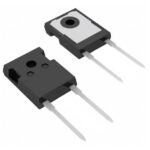 C6D16065H
The activity of extra discounts on wholesale prices is in full swing…
Please fill in your contact information and we will send you the latest wholesale price list.





