 ChipApex | Global Electronic Components Supplier
SEARCH
Search Product
Search Post
— IC芯片 | 连接器 | 传感器 | 被动器件 —
Search productSearch post
— IC芯片 | 连接器 | 传感器 | 被动器件 —
Consult the customer manager about the wholesale price.
consultation hotline:86-132-6715-2157
email:[email protected]
Contact the product manager for consultation. One-stop consultation is available.
Do you want a lower wholesale price? Please send us your inquiry and we will reply immediately.
The C8051F007 is a mixed-signal System-on-Chip microcontroller from Silicon Labs, featuring a high-speed 8051-compatible core operating at up to 25 MIPS. It integrates 32 KB of ISP Flash memory and 2304 bytes of internal SRAM. The device includes a 12-bit SAR ADC with programmable gain amplifier, two 12-bit DACs, two analog comparators, and a precision voltage reference. Digital peripherals include SMBus, SPI, UART, and a Programmable Counter Array. It operates on a 2.7V to 3.6V supply within the -40°C to +85°C temperature range.
Verify package availability against specific footprint requirements, as the C8051F007 is offered in 64-pin TQFP, 48-pin TQFP, and 32-pin LQFP configurations. Confirm that the selected variant matches the required pin count for your design. Ensure development tools support the CIP-51 core for efficient programming and debugging workflows.
Select the C8051F007 when 12-bit ADC resolution and substantial RAM are necessary compared to lower-end variants like the F000. Consider the 2304-byte SRAM capacity for complex data handling tasks. Evaluate the 2.7V to 3.6V supply constraint against system power rails. The integrated USB controller is absent; choose this model specifically for its analog richness rather than connectivity needs.
This component belongs to the C8051F0xx family of mixed-signal MCUs, which are distinguished by their true monolithic integration of analog and digital functions. Unlike standard 8051 designs, these devices utilize the CIP-51 core for significantly higher instruction throughput. The family emphasizes reducing external component counts through extensive on-chip peripheral integration.
The C8051F006 serves as a direct functional substitute within the same series, offering identical specifications except for reduced Flash memory size. Verify code compatibility and pinout alignment before substitution. Other members of the F00x/F01x families may require significant hardware or software modifications due to differing peripheral sets or memory architectures.
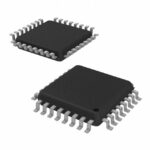 C8051F007
The activity of extra discounts on wholesale prices is in full swing…
Please fill in your contact information and we will send you the latest wholesale price list.





