ChipApex | Global Electronic Components Supplier
SEARCH
Search Product
Search Post
— IC芯片 | 连接器 | 传感器 | 被动器件 —
Search productSearch post
— IC芯片 | 连接器 | 传感器 | 被动器件 —
Consult the customer manager about the wholesale price.
consultation hotline:86-132-6715-2157
email:[email protected]
Contact the product manager for consultation. One-stop consultation is available.
Do you want a lower wholesale price? Please send us your inquiry and we will reply immediately.
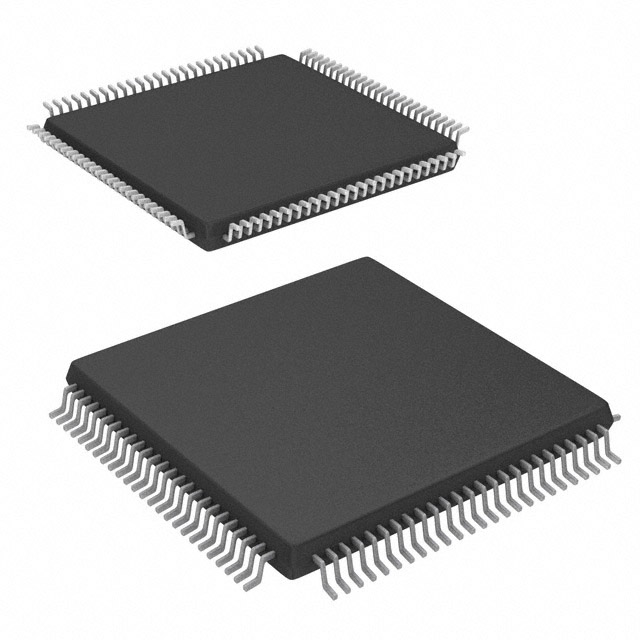
The C8051F060-GQ is a fully integrated mixed-signal System-on-a-Chip microcontroller from Silicon Labs, featuring an 8-bit CIP-51 core operating at up to 24.5 MHz with 25 MIPS throughput. It includes 64 kB of in-system programmable Flash memory and 4352 bytes of on-chip RAM. Key peripherals comprise two 16-bit 1 Msps ADCs with DMA, a 10-bit 200 ksps ADC, two 12-bit DACs, three analog comparators, and a Bosch CAN 2.0B controller. The device offers 59 digital I/O pins via a programmable crossbar, supports SPI, SMBus/I2C, and dual UART interfaces, and operates within a 2.7 V to 3.6 V supply range across -40°C to +85°C temperatures.
Verify the specific ordering suffix against official documentation to confirm package type and temperature grade. Confirm component availability status as some variants may be subject to discontinuation notices. Ensure compatibility with existing design infrastructure regarding voltage levels and pin configurations before finalizing procurement decisions.
Select this model when applications require high-performance analog-to-digital conversion alongside robust digital communication protocols like CAN. Evaluate system requirements for external memory expansion if internal storage proves insufficient. Consider power consumption profiles during active and sleep modes to ensure alignment with energy efficiency targets for the intended deployment environment.
This component belongs to the C8051F06x family of analog-intensive microcontrollers designed by Silicon Labs. The series emphasizes high integration by combining advanced mixed-signal peripherals with a fast 8-bit processor core on a single die. This architecture reduces bill-of-materials complexity and board space compared to discrete solutions.
Consult official substitution guides for compatible alternatives within the same product family or newer generations. Verify pinout compatibility and peripheral feature parity to ensure seamless integration into existing hardware designs without requiring schematic modifications.
The DMA controller automatically transfers conversion results from the ADC registers directly to on-chip RAM without CPU intervention, minimizing software overhead and allowing continuous high-speed data acquisition.
The crossbar allows flexible assignment of peripheral signals, such as UART, SPI, and timer outputs, to any available general-purpose I/O pin, simplifying PCB layout and reducing package size requirements.
 C8051F060
The activity of extra discounts on wholesale prices is in full swing…
Please fill in your contact information and we will send you the latest wholesale price list.