 ChipApex | Global Electronic Components Supplier
SEARCH
Search Product
Search Post
— IC芯片 | 连接器 | 传感器 | 被动器件 —
Search productSearch post
— IC芯片 | 连接器 | 传感器 | 被动器件 —
Consult the customer manager about the wholesale price.
consultation hotline:86-132-6715-2157
email:[email protected]
Contact the product manager for consultation. One-stop consultation is available.
Do you want a lower wholesale price? Please send us your inquiry and we will reply immediately.
The C8051F236 is a mixed-signal System on a Chip microcontroller from Silicon Labs, featuring an 8051-compatible core operating at up to 25 MHz. It integrates 8 kB of in-system programmable Flash memory and 1.25 kB of XRAM. The device includes hardware UART and SPI interfaces, three 16-bit timers, and a dedicated watchdog timer. It operates within a voltage range of 2.7 V to 3.6 V and supports temperatures from -40°C to +85°C. The component is housed in a 48-TQFP package with 32 general-purpose I/O pins.
Verify the specific revision status and RoHS compliance before procurement, as datasheets indicate this product may be discontinued or subject to end-of-life notices. Confirm that the 48-TQFP package availability aligns with current manufacturing schedules. Ensure development tools support the CIP-51 core architecture for programming and debugging purposes.
Select the C8051F236 when a fully integrated mixed-signal MCU with hardware serial interfaces is required. This model is suitable for designs needing 8 kB of Flash and 1.25 kB of RAM within a 48-pin footprint. Consider alternative models within the C8051F2xx family if different ADC resolutions or pin counts are necessary for the application.
The C8051F236 belongs to the C8051F2xx family of high-speed, mixed-signal System on a Chip microcontrollers. This family shares a common CIP-51 core architecture and peripheral set, differing primarily in memory sizes, ADC configurations, and package options. The series is designed for applications demanding high performance and low power consumption in a compact form factor.
Check for official replacement part numbers from Silicon Labs, as the C8051F236 may be listed as End of Life. Evaluate newer members of the C8051F or EFM8 families for pin-to-pin compatibility and feature parity.
No, the C8051F236 model does not include an ADC. Models such as the C8051F206 and C8051F226 in the same family include 12-bit and 8-bit ADCs, respectively.
The device features on-chip JTAG debug circuitry that supports full-speed, non-intrusive in-system debugging, allowing for breakpoints, single-stepping, and memory inspection without external emulation hardware.
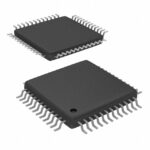 C8051F236
The activity of extra discounts on wholesale prices is in full swing…
Please fill in your contact information and we will send you the latest wholesale price list.






