 ChipApex | Global Electronic Components Supplier
SEARCH
Search Product
Search Post
— IC芯片 | 连接器 | 传感器 | 被动器件 —
Search productSearch post
— IC芯片 | 连接器 | 传感器 | 被动器件 —
Consult the customer manager about the wholesale price.
consultation hotline:86-132-6715-2157
email:[email protected]
Contact the product manager for consultation. One-stop consultation is available.
Do you want a lower wholesale price? Please send us your inquiry and we will reply immediately.
The C8051F304 is an 8-bit mixed-signal microcontroller featuring a high-speed CIP-51 core with up to 25 MIPS throughput at a 25 MHz clock frequency. It integrates 4 kB of Flash program memory and 256 bytes of internal data RAM. The device operates within a supply voltage range of 2.7 V to 3.6 V and supports industrial temperatures from -40 °C to +85 °C. Key peripherals include three 16-bit counter/timers, a programmable counter array (PCA), hardware-enhanced UART and SMBus ports, and 8 general-purpose I/O pins. It utilizes an on-chip debug circuitry for non-intrusive in-system debugging.
Verify component authenticity against official Silicon Labs documentation before integration. Confirm package type availability as QFN-11 or SOIC-14. Check current lifecycle status as the family is marked Not Recommended for New Designs. Ensure design compliance with absolute maximum ratings and operating temperature specifications during procurement validation.
Select this MCU for applications needing a fully 8051-compatible core with enhanced speed and integrated analog peripherals. Consider the C8051F30x family for designs prioritizing small form factors and low power consumption. Evaluate the specific memory requirements against the 4 kB Flash limit. Verify peripheral needs such as timer counts and serial interface compatibility before final selection.
The C8051F304 belongs to the C8051F30x series of mixed-signal ISP Flash MCUs from Silicon Laboratories. This family is characterized by its high integration of analog and digital peripherals on a single chip. The devices are designed to function as complete system-on-chip solutions, reducing external component count. The series supports both in-circuit programming and standard development workflows.
Silicon Labs marks the C8051F30x family as Not Recommended for New Designs. Developers should evaluate newer 8-bit or 32-bit microcontroller families for future projects. Existing designs may continue using this part but should assess long-term supply stability and potential obsolescence risks.
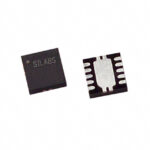 C8051F304
The activity of extra discounts on wholesale prices is in full swing…
Please fill in your contact information and we will send you the latest wholesale price list.






