 ChipApex | Global Electronic Components Supplier
SEARCH
Search Product
Search Post
— IC芯片 | 连接器 | 传感器 | 被动器件 —
Search productSearch post
— IC芯片 | 连接器 | 传感器 | 被动器件 —
Consult the customer manager about the wholesale price.
consultation hotline:86-132-6715-2157
email:[email protected]
Contact the product manager for consultation. One-stop consultation is available.
Do you want a lower wholesale price? Please send us your inquiry and we will reply immediately.
The C8051F320-GQ is a mixed-signal ISP FLASH microcontroller from Silicon Labs, featuring a high-speed 8051 core operating at up to 25 MIPS with a 25 MHz clock. It integrates a full-speed USB 2.0 function controller with an integrated transceiver and clock recovery circuit, eliminating the need for external crystals or resistors. The device includes 16 kB of in-system programmable Flash memory and 2304 bytes of internal RAM. Analog peripherals consist of a 10-bit ADC supporting up to 200 ksps conversion rates and two comparators. Digital interfaces include hardware-enhanced SPI, UART, and SMBus serial ports.
Verify component authenticity through authorized distributors or direct manufacturer channels. Confirm package integrity upon receipt, as surface-mount devices are sensitive to physical damage. Ensure compliance with relevant environmental regulations applicable to your region. Review the latest datasheet revision for any updates regarding electrical characteristics or pin definitions before finalizing design implementations.
Select this component when a complete single-chip USB solution is required without external PHYs or oscillators. Consider the 32-pin LQFP package for standard PCB layouts. Evaluate the 16 kB Flash capacity against application code size requirements. Verify that the 25 MHz maximum system frequency meets real-time processing demands. Check compatibility with existing development tools supporting the C2 debug interface.
This part belongs to the C8051F32x family of mixed-signal microcontrollers designed for USB applications. The series combines a fast 8051 core with extensive analog and digital peripherals on a single die. The GQ suffix indicates a specific tape-and-reel packaging variant suitable for automated assembly processes. This family targets cost-sensitive designs needing integrated USB functionality.
Consult official substitution lists for compatible alternatives within the same product line. Verify pinout compatibility if replacing with different package options like the QFN variant. Ensure software compatibility remains intact due to identical core architecture. Check for any changes in peripheral availability or electrical specifications between original and substitute parts.
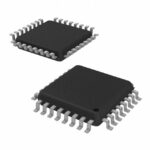 C8051F320-GQ
The activity of extra discounts on wholesale prices is in full swing…
Please fill in your contact information and we will send you the latest wholesale price list.







