ChipApex | Global Electronic Components Supplier
SEARCH
Search Product
Search Post
— IC芯片 | 连接器 | 传感器 | 被动器件 —
Search productSearch post
— IC芯片 | 连接器 | 传感器 | 被动器件 —
Consult the customer manager about the wholesale price.
consultation hotline:86-132-6715-2157
email:[email protected]
Contact the product manager for consultation. One-stop consultation is available.
Do you want a lower wholesale price? Please send us your inquiry and we will reply immediately.
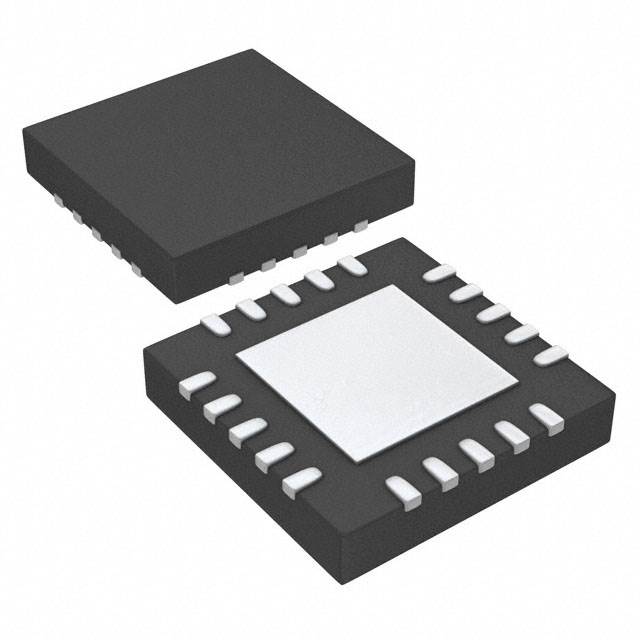
The C8051F399-A-GMR is an 8-bit mixed-signal microcontroller from the Silicon Labs C8051F39x family. It features a pipelined CIP-51 core operating at up to 50 MHz with 50 MIPS throughput. The device includes 16 kB of in-system programmable Flash memory, 1 kB of internal data RAM (256 bytes + 768 XRAM), and 512 bytes of EEPROM. Key peripherals include a 10-bit ADC with 500 ksps throughput, two 10-bit current-mode DACs, an analog comparator, and a precision temperature sensor. It operates on a 1.8 V to 3.6 V supply and supports -40 °C to +105 °C temperatures.
Verify the specific suffix 'A' corresponds to the extended temperature range (-40 °C to +105 °C) as defined in the official datasheet. Confirm package type QFN-20 matches the design footprint. Check for 'Not Recommended for New Designs' status if planning new hardware implementations. Ensure voltage supply requirements align with the 1.8 V to 3.6 V operational range.
Select this component when a small form factor MCU with integrated analog peripherals is required. It is suitable for designs needing direct ADC/DAC functionality without external chips. Consider the 16 kB Flash limit for firmware size. Evaluate power consumption against active mode currents if battery life is critical. Compare pin count and peripheral availability against other C8051F39x variants.
This part belongs to the C8051F39x family, which serves as a next-generation upgrade to the C8051F33x series. It maintains code and footprint compatibility while offering increased speed, more RAM, and extended temperature ranges. The family emphasizes system-on-a-chip integration with on-chip reset monitors and oscillators.
Direct substitutes within the same family include C8051F392, C8051F393, C8051F396, C8051F397, and C8051F398, which share the QFN-20 package and similar specifications but may differ in Flash or EEPROM capacity.
Yes, the Flash memory can be reprogrammed in-circuit, allowing for field upgrades of the 8051 firmware.
The precision temperature sensor is accurate to ±2 °C across the temperature range without requiring user calibration.
Yes, the calibrated internal 49 MHz oscillator supports crystal-less UART operation and can be used as the primary system clock source.
 C8051F399-A-GMR
The activity of extra discounts on wholesale prices is in full swing…
Please fill in your contact information and we will send you the latest wholesale price list.