 ChipApex | Global Electronic Components Supplier
SEARCH
Search Product
Search Post
— IC芯片 | 连接器 | 传感器 | 被动器件 —
Search productSearch post
— IC芯片 | 连接器 | 传感器 | 被动器件 —
Consult the customer manager about the wholesale price.
consultation hotline:86-132-6715-2157
email:[email protected]
Contact the product manager for consultation. One-stop consultation is available.
Do you want a lower wholesale price? Please send us your inquiry and we will reply immediately.
The C8051F533-C-IM is an automotive-grade, fully static 8-bit microcontroller based on the CIP-51 core. It features 4 kB of ISP Flash memory and 256 bytes of internal data RAM. The device operates at a maximum system clock frequency of 25 MHz, delivering up to 25 MIPS throughput. It supports a supply voltage range from 2.0 V to 5.25 V and includes a built-in LDO regulator. Key peripherals include a 12-bit ADC with programmable throughput up to 200 ksps, a hardware SPI interface, a UART serial port, and a LIN 2.1 controller. The component is housed in a 20-pin TSSOP package.
Verify the specific suffix 'C' indicates the commercial temperature grade variant within the automotive-qualified family. Confirm the package type matches the required PCB footprint, as this part number specifies the TSSOP-20 configuration. Check current lifecycle status, as documentation marks this family as not recommended for new designs. Ensure compatibility with existing design tools and development kits before finalizing procurement decisions.
Select this component when designing systems that require automotive qualification alongside legacy 8051 compatibility. It is suitable for applications needing moderate processing speed with integrated analog capabilities like temperature sensing. Consider the limited RAM size for complex algorithm implementation. Evaluate if the available I/O count meets the system requirements given the shared pin functions in the 20-pin package.
This microcontroller belongs to the C8051F52x/F53x family, which combines high-performance mixed-signal capabilities with the standard 8051 instruction set. The series is designed for cost-sensitive embedded applications requiring high integration. It utilizes Silicon Labs' CIP-51 architecture to improve instruction execution efficiency compared to traditional 8051 cores while maintaining software compatibility.
Silicon Laboratories recommends the EFM8BB52F16I-QFN20 as a replacement for this end-of-life part. Developers should evaluate the architectural differences between the C8051F and EFM8 families during migration.
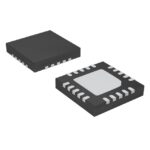 C8051F533-C-IM
The activity of extra discounts on wholesale prices is in full swing…
Please fill in your contact information and we will send you the latest wholesale price list.





