 ChipApex | Global Electronic Components Supplier
SEARCH
Search Product
Search Post
— IC芯片 | 连接器 | 传感器 | 被动器件 —
Search productSearch post
— IC芯片 | 连接器 | 传感器 | 被动器件 —
Consult the customer manager about the wholesale price.
consultation hotline:86-132-6715-2157
email:[email protected]
Contact the product manager for consultation. One-stop consultation is available.
Do you want a lower wholesale price? Please send us your inquiry and we will reply immediately.
The C8051F537A-ITR is an 8-bit microcontroller from the C8051F52x/F53x family, manufactured by Silicon Laboratories. It features a high-speed CIP-51 core operating at up to 25 MHz with 25 MIPS throughput. The device includes 8 kB of ISP Flash memory and 256 bytes of internal data RAM. Key peripherals include a 12-bit ADC with programmable throughput up to 200 ksps, a programmable comparator, and a built-in temperature sensor. Digital interfaces comprise hardware SPI and UART, alongside a LIN 2.1 controller. It operates on a supply voltage of 2.0 to 5.25 V and supports automotive qualification within a temperature range of –40 to +125 °C.
Verify the specific suffix ITR indicates tape and reel packaging when sourcing components. Confirm that the C8051F537A variant aligns with project requirements for 8 kB Flash capacity. Ensure compatibility with existing design infrastructure regarding the TSSOP-20 package dimensions. Validate that the automotive temperature grade meets environmental specifications for the intended deployment scenario.
Select this component for designs prioritizing mixed-signal integration within a compact footprint. The inclusion of a precise internal oscillator simplifies clocking requirements for UART and LIN operations. Consider the 12-bit ADC resolution for applications demanding accurate signal processing. Evaluate the 2.0 V minimum supply voltage against battery-operated system constraints to ensure stable operation across the discharge curve.
This microcontroller belongs to the C8051F52x/F53x series, which represents a fully integrated mixed-signal system-on-chip solution. The family emphasizes ease of development through extensive on-chip resources and robust debug capabilities. It targets applications needing reliable performance in harsh environments, supported by its automotive qualification status and wide operating temperature range.
Consult the manufacturer's product selection guide for direct functional equivalents within the C8051F52x/F53x family. Verify pinout compatibility if substituting with other variants in the same package type. Review datasheet revisions to ensure peripheral configurations remain consistent during replacement planning.
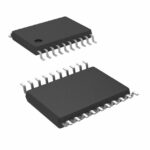 C8051F537A-ITR
The activity of extra discounts on wholesale prices is in full swing…
Please fill in your contact information and we will send you the latest wholesale price list.





