 ChipApex | Global Electronic Components Supplier
SEARCH
Search Product
Search Post
— IC芯片 | 连接器 | 传感器 | 被动器件 —
Search productSearch post
— IC芯片 | 连接器 | 传感器 | 被动器件 —
Consult the customer manager about the wholesale price.
consultation hotline:86-132-6715-2157
email:[email protected]
Contact the product manager for consultation. One-stop consultation is available.
Do you want a lower wholesale price? Please send us your inquiry and we will reply immediately.
The C8051F562-IMR is an automotive-grade mixed-signal ISP Flash MCU from the C8051F56x family, manufactured by Silicon Labs. It features a high-speed CIP-51 core operating at up to 50 MIPS with a 50 MHz clock. The device integrates 32 kB of in-system programmable Flash memory and 2304 bytes of internal data RAM. Key analog peripherals include a 12-bit ADC supporting up to 200 ksps sampling rate and two comparators. Digital interfaces encompass CAN 2.0, LIN 2.1, UART, SMBus, and SPI controllers. It operates within a supply voltage range of 1.8 V to 5.25 V and supports an industrial temperature range of –40 °C to +125 °C.
Verify component authenticity through authorized distribution channels. Confirm package integrity upon receipt. Ensure ESD precautions are observed during handling. Validate part markings against official datasheet specifications. Check for any specific lot traceability requirements mandated by your quality management system.
Select this component when automotive reliability and integrated CAN/LIN communication are required. Consider the 32 kB Flash size and 2304 bytes RAM for application complexity. Evaluate pin count compatibility with the 32-pin QFN/QFN package options available in the F56x series. Ensure power supply constraints align with the 1.8 V to 5.25 V operating range.
This microcontroller belongs to the C8051F55x/56x/57x family of mixed-signal ISPs Flash MCUs. These devices are designed for applications requiring high integration and performance in small form factors. The family shares common architectural features including the CIP-51 core and extensive peripheral sets, differing primarily in memory sizes and I/O counts.
Consult the official datasheet for pin-compatible alternatives within the C8051F55x/56x/57x family. Verify that substitute parts meet the same automotive qualification and temperature range requirements. Ensure functional equivalence of CAN and LIN controllers before implementation.
Yes, the C8051F56x family is qualified to AEC-Q100 standards and operates within the –40 °C to +125 °C temperature range, making it suitable for automotive use.
No, the integrated CAN 2.0 controller does not require an external crystal for operation.
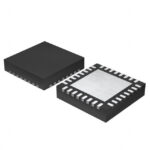 C8051F562-IMR
The activity of extra discounts on wholesale prices is in full swing…
Please fill in your contact information and we will send you the latest wholesale price list.





