ChipApex | Global Electronic Components Supplier
SEARCH
Search Product
Search Post
— IC芯片 | 连接器 | 传感器 | 被动器件 —
Search productSearch post
— IC芯片 | 连接器 | 传感器 | 被动器件 —
Consult the customer manager about the wholesale price.
consultation hotline:86-132-6715-2157
email:[email protected]
Contact the product manager for consultation. One-stop consultation is available.
Do you want a lower wholesale price? Please send us your inquiry and we will reply immediately.
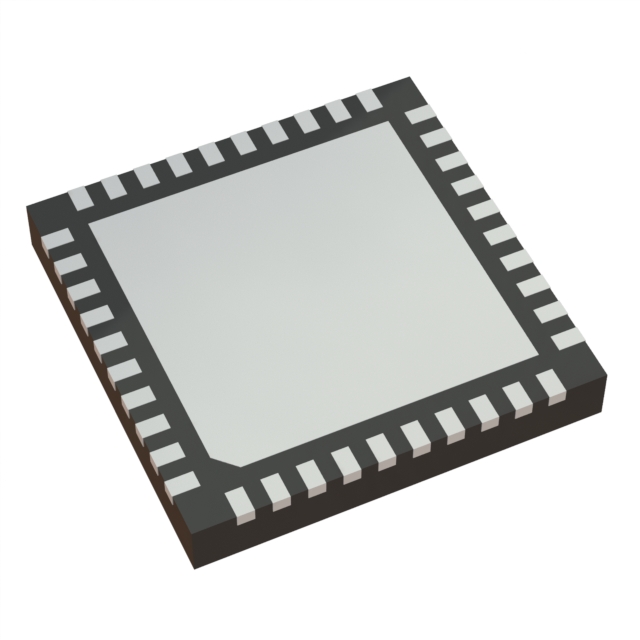
The C8051F573-IM is a mixed-signal ISP Flash MCU from the C8051F55x/56x/57x family, featuring a high-speed 8051 core with up to 50 MIPS throughput at 50 MHz. It includes 2304 bytes of internal data RAM and 32 kB of in-system programmable Flash memory. The device integrates a 12-bit ADC supporting up to 200 ksps and 32 external single-ended inputs, along with two comparators. Digital peripherals include CAN 2.0 and LIN 2.1 controllers without crystal requirements, hardware-enhanced UART, SMBus, SPI, four 16-bit timers, and a 16-bit PCA. Operating voltage ranges from 1.8 V to 5.25 V, with an automotive qualification for temperatures between –40 °C and +125 °C.
Verify component authenticity through authorized Silicon Labs distributors or certified supply chain partners. Confirm the specific suffix matches the required package and temperature grade. Check current lifecycle status as this family may be marked Not Recommended for New Designs. Ensure ESD protection protocols are followed during handling due to the CMOS technology used in the QFN package.
Select this model when a complete mixed-signal solution with integrated CAN and LIN interfaces is required. The 32 kB Flash size suits applications needing moderate code storage with in-system programming capabilities. Consider the 40-pin QFN package if maximum I/O count and peripheral availability are necessary. Evaluate power consumption requirements against the typical operating current specifications at the target clock frequency.
This component belongs to the C8051F55x/56x/57x series of mixed-signal MCUs designed by Silicon Laboratories. The family emphasizes high integration by combining digital processing with analog peripherals on a single chip. The CIP-51 architecture provides enhanced performance over standard 8051 designs while maintaining compatibility. These devices target cost-sensitive and space-constrained embedded applications.
Consult official Silicon Labs documentation for confirmed substitute part numbers within the same family or next-generation equivalents. Verify pinout compatibility and peripheral mapping before transitioning to alternative models. Ensure that any replacement maintains the required automotive qualification and interface support.
 C8051F573-IM
The activity of extra discounts on wholesale prices is in full swing…
Please fill in your contact information and we will send you the latest wholesale price list.