 ChipApex | Global Electronic Components Supplier
SEARCH
Search Product
Search Post
— IC芯片 | 连接器 | 传感器 | 被动器件 —
Search productSearch post
— IC芯片 | 连接器 | 传感器 | 被动器件 —
Consult the customer manager about the wholesale price.
consultation hotline:86-132-6715-2157
email:[email protected]
Contact the product manager for consultation. One-stop consultation is available.
Do you want a lower wholesale price? Please send us your inquiry and we will reply immediately.
The C8051F581-IM is an 8-bit mixed-signal microcontroller from the Silicon Labs C8051F58x family, featuring a high-speed 8051 core with up to 50 MIPS throughput at a 50 MHz clock. It integrates 128 kB of in-system programmable Flash memory and 8448 bytes of internal data RAM (including 8192 bytes XRAM). The device includes a 12-bit ADC supporting up to 32 external inputs, three comparators, CAN 2.0 and LIN 2.1 controllers, two UARTs, and an enhanced SPI interface. It operates on a supply voltage of 1.8 V to 5.25 V, supports automotive temperature ranges (-40°C to +125°C), and is housed in a 48-pin QFN package.
Verify component authenticity through authorized distributors or direct manufacturer channels. Confirm the specific suffix matches the required package type and temperature rating. Check for current lifecycle status as this series may be subject to obsolescence notices. Ensure ESD handling protocols are followed during storage and assembly. Validate that the intended application complies with automotive qualification standards if operating within the specified temperature range.
Select this component when a robust 8-bit MCU with integrated automotive bus interfaces is required. Consider the 128 kB Flash capacity for complex firmware requirements. Evaluate the 48-pin QFN footprint against PCB space constraints. Compare power consumption metrics across different clock speeds for battery-sensitive designs. Verify peripheral availability, such as the number of available UARTs or PCA modules, against system connectivity needs.
This part belongs to the C8051F58x/F59x Mixed Signal ISP Flash MCU Family by Silicon Laboratories. The family shares a common architectural foundation but varies in memory size, pin count, and peripheral configurations. The C8051F581 variant specifically targets applications needing substantial program memory and extensive I/O options within a compact 48-pin form factor.
Consult official Silicon Labs documentation for qualified substitute part numbers within the same family or next-generation equivalents. Verify pin-to-pin compatibility and register mapping before substitution. Review any errata sheets associated with alternative parts to ensure functional parity.
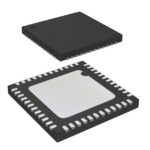 C8051F581-IM
The activity of extra discounts on wholesale prices is in full swing…
Please fill in your contact information and we will send you the latest wholesale price list.





