 ChipApex | Global Electronic Components Supplier
SEARCH
Search Product
Search Post
— IC芯片 | 连接器 | 传感器 | 被动器件 —
Search productSearch post
— IC芯片 | 连接器 | 传感器 | 被动器件 —
Consult the customer manager about the wholesale price.
consultation hotline:86-132-6715-2157
email:[email protected]
Contact the product manager for consultation. One-stop consultation is available.
Do you want a lower wholesale price? Please send us your inquiry and we will reply immediately.
The C8051F585-IM is an 8-bit mixed-signal microcontroller from the C8051F58x/F59x family, featuring a high-speed CIP-51 core operating at up to 50 MHz. It integrates 128 kB of in-system programmable Flash memory and 8448 bytes of internal data RAM (256 + 8192 XRAM). The device includes a 12-bit ADC with up to 200 ksps throughput, three comparators, and extensive digital peripherals such as CAN 2.0, LIN 2.1, two UARTs, SMBus, and SPI. It supports a supply voltage range of 1.8 V to 5.25 V and operates within a temperature range of –40 °C to +125 °C.
Verify component authenticity through authorized Silicon Labs distributors or certified partners. Confirm package integrity and pin alignment against the QFN-48 specifications prior to assembly. Ensure compliance with RoHS3 standards and check for any relevant product change notices affecting manufacturing sites or materials. Validate that the specific ordering suffix matches the required package variant for your design.
Select this model when designing systems necessitating automotive-grade reliability alongside rich peripheral integration. The combination of CAN 2.0 and LIN 2.1 controllers eliminates the need for external transceivers in many network topologies. Consider the 128 kB Flash capacity for complex firmware requirements and evaluate the 50 MHz clock speed against real-time processing constraints. Verify power consumption profiles against available supply rails within the specified 1.8 V to 5.25 V range.
This component belongs to the C8051F58x/F59x series of mixed-signal ISPs Flash MCUs. It shares architectural similarities with other members of the family but is distinguished by its specific memory configuration and I/O count. The device utilizes a 48-pin QFN package, offering a compact footprint suitable for space-constrained PCB layouts while maintaining high pin density for peripheral connectivity.
Consult the official datasheet for direct pin-compatible alternatives within the C8051F58x/F59x family. Verify memory sizes and peripheral availability in potential substitutes to ensure functional parity. Cross-reference package dimensions and thermal characteristics to maintain mechanical compatibility.
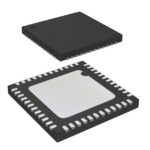 C8051F585-IM
The activity of extra discounts on wholesale prices is in full swing…
Please fill in your contact information and we will send you the latest wholesale price list.






