 ChipApex | Global Electronic Components Supplier
SEARCH
Search Product
Search Post
— IC芯片 | 连接器 | 传感器 | 被动器件 —
Search productSearch post
— IC芯片 | 连接器 | 传感器 | 被动器件 —
Consult the customer manager about the wholesale price.
consultation hotline:86-132-6715-2157
email:[email protected]
Contact the product manager for consultation. One-stop consultation is available.
Do you want a lower wholesale price? Please send us your inquiry and we will reply immediately.
The C8051F715-GQ is an 8-bit mixed-signal ISP Flash MCU from Silicon Labs, featuring a high-speed 8051 core operating at up to 25 MHz. It includes 8 kB of in-system programmable Flash memory and 512 bytes of internal data RAM. The device integrates a capacitance-to-digital converter supporting up to 38 input channels for capacitive sensing applications. Digital peripherals include hardware UART, SMBus, SPI, four 16-bit timers, and a programmable counter array. It operates within a supply voltage range of 1.8 V to 3.6 V and supports temperatures from -40 °C to +85 °C.
Verify component authenticity through authorized distributors or direct manufacturer channels. Confirm package integrity and pin alignment against TQFP-48 specifications. Review datasheet revision history for any functional updates. Ensure environmental compliance documentation matches project requirements. Validate that the specific ordering suffix corresponds to the required tape and reel or tube packaging configuration.
Evaluate the 8 kB Flash capacity against application code size requirements. Assess the 512-byte RAM limit for variable storage needs. Consider the 39 available I/O pins for peripheral connectivity. Verify that the 1.8 V to 3.6 V operating range aligns with the target system power supply. Check if the integrated capacitive sense module meets sensitivity requirements for the intended touch interface design.
This component belongs to the C8051F70x/71x family of mixed-signal microcontrollers. These devices are designed for applications requiring integrated analog functions alongside standard digital processing. The family emphasizes ease of development through comprehensive on-chip debug features and flexible clocking options. They serve as cost-effective solutions for controlling sensors and managing communication protocols in compact form factors.
Consult the official datasheet for cross-reference information regarding compatible replacement parts within the same product family. Verify pinout compatibility and electrical characteristics before substitution. Ensure that any alternative component maintains support for the required capacitive sensing and communication interfaces.
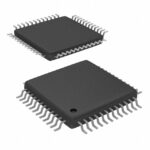 C8051F715-GQ
The activity of extra discounts on wholesale prices is in full swing…
Please fill in your contact information and we will send you the latest wholesale price list.






