 ChipApex | Global Electronic Components Supplier
SEARCH
Search Product
Search Post
— IC芯片 | 连接器 | 传感器 | 被动器件 —
Search productSearch post
— IC芯片 | 连接器 | 传感器 | 被动器件 —
Consult the customer manager about the wholesale price.
consultation hotline:86-132-6715-2157
email:[email protected]
Contact the product manager for consultation. One-stop consultation is available.
Do you want a lower wholesale price? Please send us your inquiry and we will reply immediately.
The C8051F808-GMR is an 8-bit mixed-signal ISP Flash microcontroller from the Silicon Labs C8051F80x-83x family. It features a high-speed CIP-51 core operating at up to 25 MIPS with a 25 MHz clock. The device includes 16 kB of in-system programmable Flash memory and 512 bytes of internal data RAM. Key peripherals include a 10-bit ADC, capacitive sense interface, comparators, UART, SMBus, SPI, and PCA. It operates on a supply voltage of 1.8V to 3.6V within a temperature range of -40°C to +85°C.
Verify component authenticity through authorized distributors. Confirm package type matches design requirements as variants exist. Check current status as this family may be restricted for new designs. Ensure environmental compliance documentation aligns with target market regulations. Validate pinout compatibility during integration planning.
Evaluate memory requirements against the 16 kB Flash and 512 byte RAM limits. Consider peripheral needs such as ADC resolution and capacitive sense channels. Assess power supply constraints given the 1.8V to 3.6V operating range. Review package options including QFN-20 and QSOP-24 for physical fit. Compare performance metrics with newer alternatives if new design approval is required.
This component belongs to the C8051F80x-83x mixed-signal ISP Flash MCU family by Silicon Labs. The series integrates standard 8051 functionality with advanced analog and digital peripherals on a single chip. It targets applications needing cost-effective, low-power microcontrollers with extensive I/O and conversion capabilities.
Public confirmed substitute part numbers are not available in the provided documentation. Consult manufacturer resources for potential obsolescence management strategies or next-generation equivalents within the same product line.
The CIP-51 core achieves up to 25 MIPS throughput when operating at a 25 MHz clock frequency.
Yes, it includes a capacitance-to-digital converter that supports buttons, sliders, wheels, and capacitive proximity sensing with fast conversion times.
No, the device features on-chip debug circuitry that facilitates full-speed, non-intrusive in-system debug without requiring an emulator.
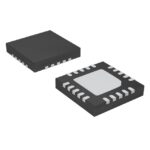 C8051F808-GMR
The activity of extra discounts on wholesale prices is in full swing…
Please fill in your contact information and we will send you the latest wholesale price list.







