 ChipApex | Global Electronic Components Supplier
SEARCH
Search Product
Search Post
— IC芯片 | 连接器 | 传感器 | 被动器件 —
Search productSearch post
— IC芯片 | 连接器 | 传感器 | 被动器件 —
Consult the customer manager about the wholesale price.
consultation hotline:86-132-6715-2157
email:[email protected]
Contact the product manager for consultation. One-stop consultation is available.
Do you want a lower wholesale price? Please send us your inquiry and we will reply immediately.
The C8051F921-GM is an 8-bit microcontroller from the Silicon Labs C8051F9xx series, featuring a high-speed 8051 core operating at up to 25 MHz. It includes 32 kB of in-system programmable Flash memory and 4352 bytes of internal data RAM. The device supports a supply voltage range of 0.9 V to 3.6 V, utilizing a built-in DC-DC converter for one-cell mode operation. Key peripherals include a 10-bit ADC with 300 ksps throughput, two comparators, multiple serial interfaces (SMBus, SPI, UART), and four general-purpose timers.
Verify the specific suffix 'GM' corresponds to the 24-pin QFN package variant when sourcing components. Confirm that the required memory capacity aligns with the 32 kB Flash specification of the F92x sub-series rather than the 64 kB F93x series. Ensure design compatibility with the 0.9 V to 3.6 V operating range and check for any end-of-life notices associated with this specific revision.
Select this component for designs prioritizing ultra-low power consumption in sleep modes while maintaining high-performance processing during active states. The integrated DC-DC converter simplifies power management for single-cell lithium or alkaline batteries. Consider the 24-pin QFN package constraints for PCB layout if space is limited, and verify that the available I/O ports meet the interface requirements for SMBus, SPI, and UART connections.
This MCU belongs to the C8051F9xx family, which distinguishes itself through industry-leading low current consumption in both active and sleep modes. The family integrates extensive analog peripherals alongside the digital core, reducing the need for external components. The C8051F921 variant specifically offers 32 kB of Flash, positioning it between smaller entry-level models and the higher-capacity F93x counterparts within the same ecosystem.
Direct substitutes within the same package and pinout include other members of the C8051F92x series, such as the C8051F920 or C8051F922, provided their peripheral configurations match the application needs. Cross-referencing datasheets is essential to ensure identical memory sizes and I/O assignments before swapping part numbers.
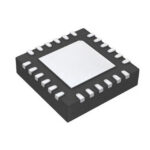 C8051F921-GM
The activity of extra discounts on wholesale prices is in full swing…
Please fill in your contact information and we will send you the latest wholesale price list.





