 ChipApex | Global Electronic Components Supplier
SEARCH
Search Product
Search Post
— IC芯片 | 连接器 | 传感器 | 被动器件 —
Search productSearch post
— IC芯片 | 连接器 | 传感器 | 被动器件 —
Consult the customer manager about the wholesale price.
consultation hotline:86-132-6715-2157
email:[email protected]
Contact the product manager for consultation. One-stop consultation is available.
Do you want a lower wholesale price? Please send us your inquiry and we will reply immediately.
The C8051F931-GMR is an 8-bit microcontroller from the Silicon Labs C8051F9xx series, featuring a high-speed 8051 core with up to 25 MIPS throughput at a 25 MHz clock. It includes 64 kB of in-system programmable Flash memory and 4352 bytes of internal data RAM. The device supports a supply voltage range of 0.9 V to 3.6 V, utilizing a built-in DC-DC converter for one-cell mode operation. Key peripherals include a 10-bit SAR ADC with 23 external inputs, two comparators, hardware SMBus, dual SPI, and UART interfaces. It operates within a temperature range of -40°C to +85°C and is housed in a 32-pin QFN package.
Verify the specific suffix GMR indicates tape and reel packaging when sourcing components. Confirm that the ordering part number matches the exact memory configuration required, as the F93x family shares pinouts with variants having different Flash sizes. Ensure compatibility with development tools such as the ToolStick adapter for initial prototyping and firmware validation.
Select this component when a robust 8051 architecture is needed alongside extensive analog capabilities like a high-resolution ADC and multiple comparators. The integrated DC-DC converter makes it suitable for designs constrained by strict power budgets or single-cell lithium battery supplies. Consider the 32-QFN package dimensions if board space is limited compared to larger LQFP options.
This MCU belongs to the C8051F9xx family, which emphasizes mixed-signal integration on a standard 8051 core. The F931 variant specifically provides the maximum Flash capacity within its sub-series. It is designed to replace older discrete solutions by combining processing, analog conversion, and communication interfaces into a single compact silicon die.
C8051F930-G-GMR
The C8051F931 utilizes a built-in DC-DC converter to step up the input voltage, allowing stable operation even when the supply drops below the internal regulator threshold.
The SmaRTClock can operate using an external 32 kHz crystal or switch to an internal self-oscillate mode to minimize external component count.
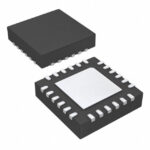 C8051F931-GMR
The activity of extra discounts on wholesale prices is in full swing…
Please fill in your contact information and we will send you the latest wholesale price list.






