 ChipApex | Global Electronic Components Supplier
SEARCH
Search Product
Search Post
— IC芯片 | 连接器 | 传感器 | 被动器件 —
Search productSearch post
— IC芯片 | 连接器 | 传感器 | 被动器件 —
Consult the customer manager about the wholesale price.
consultation hotline:86-132-6715-2157
email:[email protected]
Contact the product manager for consultation. One-stop consultation is available.
Do you want a lower wholesale price? Please send us your inquiry and we will reply immediately.
The C8051F988-GMR is an 8-bit microcontroller from the Silicon Labs C8051F9xx series, featuring a CIP-51 core operating at up to 25MHz. It integrates 4KB of flash program memory and 512 bytes of RAM. The device includes 10-channel 10-bit analog-to-digital converters (ADC). Connectivity options comprise SMBus, SPI, and UART/USART interfaces. It operates within a voltage range of 1.8V to 3.6V and supports industrial temperatures from -40°C to 85°C. The component is housed in a 24-QFN package.
Verify the specific suffix 'GMR' corresponds to the tape and reel packaging configuration required for automated assembly processes. Confirm that the active status aligns with long-term supply requirements, as availability may change. Ensure compatibility with existing design-in tools and debuggers such as the DEBUGADAPTER1-USB for development and validation phases.
Select this model when 4KB of flash and 512 bytes of RAM are sufficient for application logic. The 24-pin QFN footprint is suitable for space-constrained designs. Consider alternative pin counts if more general-purpose I/O or additional peripherals are needed. Verify that the 1.8V to 3.6V supply range matches the system power architecture.
This component belongs to the C8051F9xx family of mixed-signal microcontrollers. These devices integrate standard 8051 cores with extensive on-chip peripherals. The family shares common architectural features but varies in memory size, I/O count, and ADC resolution. This specific part offers a balance of processing capability and analog performance in a compact form factor.
C8051F988-C-GMR is a documented variant within the same product line. Verify package and electrical specifications before substitution. Other members of the C8051F9xx series may serve as alternatives if memory or pin configurations differ.
The internal oscillator supports a maximum frequency of 25MHz.
Yes, it integrates ten 10-bit analog-to-digital converter channels.
The device supports SMBus (2-wire/I2C), SPI, and UART/USART protocols.
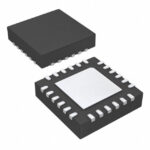 C8051F988-GMR
The activity of extra discounts on wholesale prices is in full swing…
Please fill in your contact information and we will send you the latest wholesale price list.






