 ChipApex | Global Electronic Components Supplier
SEARCH
Search Product
Search Post
— IC芯片 | 连接器 | 传感器 | 被动器件 —
Search productSearch post
— IC芯片 | 连接器 | 传感器 | 被动器件 —
Consult the customer manager about the wholesale price.
consultation hotline:86-132-6715-2157
email:[email protected]
Contact the product manager for consultation. One-stop consultation is available.
Do you want a lower wholesale price? Please send us your inquiry and we will reply immediately.
The C8051F997-GUR is an 8-bit microcontroller from the Silicon Labs C8051F9xx family, featuring a CIP-51 core operating at up to 25 MHz. It integrates 8 KB of flash memory and 512 bytes of RAM within a 24-QSOP package. The device supports ultra-low power consumption with active current as low as 150 µA/MHz and sleep modes down to 10 nA. It includes capacitive sensing capabilities, internal oscillators, and standard interfaces such as SPI, UART, and I2C/SMBus.
Verify component authenticity through authorized Silicon Labs distributors or certified partners. Confirm package integrity and moisture sensitivity level handling procedures upon receipt. Ensure compatibility with existing firmware environments before integration. Request official datasheets and errata documents for final design validation. Maintain proper storage conditions to preserve component reliability.
Select this model when ultra-low power operation and integrated capacitive sensing are primary requirements. Consider the 24-QSOP package constraints for PCB layout optimization. Evaluate the 8 KB flash capacity against application code size needs. Verify that the 25 MHz maximum clock speed meets real-time processing demands. Assess thermal performance within the specified -40°C to 85°C operating range.
The C8051F997-GUR belongs to the C8051F9xx series of ultra-low power microcontrollers designed by Silicon Labs. This family emphasizes energy efficiency while maintaining robust processing capabilities. The CIP-51 core provides enhanced performance compared to traditional 8051 architectures. The series targets applications where power conservation and touch interface integration are critical design factors.
Public confirmed substitute part numbers include EFM8BB51F8G-C-TSSOP20R from Silicon Labs. Verify functional equivalence regarding pinout, memory size, and peripheral availability. Review updated feature sets and package dimensions for mechanical compatibility. Consult official replacement guides for migration support and firmware adaptation requirements.
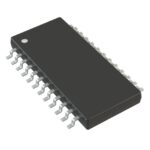 C8051F997-GUR
The activity of extra discounts on wholesale prices is in full swing…
Please fill in your contact information and we will send you the latest wholesale price list.






