 ChipApex | Global Electronic Components Supplier
SEARCH
Search Product
Search Post
— IC芯片 | 连接器 | 传感器 | 被动器件 —
Search productSearch post
— IC芯片 | 连接器 | 传感器 | 被动器件 —
Consult the customer manager about the wholesale price.
consultation hotline:86-132-6715-2157
email:[email protected]
Contact the product manager for consultation. One-stop consultation is available.
Do you want a lower wholesale price? Please send us your inquiry and we will reply immediately.
The C8051T321-GMR is an 8-bit microcontroller from Silicon Labs, part of the C8051T32x family. It features a high-speed CIP-51 core operating at up to 48 MHz with 48 MIPS throughput. The device integrates 64 kB of byte-programmable EPROM and up to 3328 bytes of internal data RAM. Key peripherals include a full-speed USB 2.0 function controller with integrated transceiver and clock recovery, two enhanced UARTs, SPI, SMBus, four 16-bit timers, and a PCA with PWM functionality. It operates on a supply voltage of 1.8 V to 5.25 V and supports temperatures from -40°C to +85°C.
Verify component authenticity through authorized distributors or Silicon Labs directly. Confirm package type matches design requirements, as options include QFN-28, QFN-32, and LQFP-32. Check for end-of-life status, as this family may be marked not recommended for new designs. Ensure ESD handling protocols are followed during assembly due to moisture sensitivity classification.
Select this model when EPROM storage is required for firmware updates via firmware running on the device itself. Choose over Flash variants if specific in-application programming constraints favor EPROM technology. Verify pin count compatibility with the target PCB layout, considering the available QFN and LQFP packages. Ensure the 1.8 V to 5.25 V supply range aligns with the system power architecture.
This component belongs to the C8051T32x series of mixed-signal microcontrollers. It shares architectural similarities with the C8051F3xx and C8051T6xx families but distinguishes itself through the use of EPROM instead of Flash memory. The T32x series is designed for cost-sensitive applications requiring robust USB connectivity and standard 8051 compatibility.
C8051T320-GM: Identical specifications with different packaging suffix.
Yes, the C8051T321-GMR supports in-application programming (IAP) of its EPROM memory using firmware running on the device.
No, the device includes an integrated clock recovery mechanism and internal oscillators, removing the need for an external crystal for USB operation.
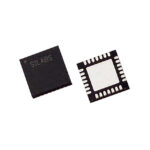 C8051T321-GMR
The activity of extra discounts on wholesale prices is in full swing…
Please fill in your contact information and we will send you the latest wholesale price list.






