 ChipApex | Global Electronic Components Supplier
SEARCH
Search Product
Search Post
— IC芯片 | 连接器 | 传感器 | 被动器件 —
Search productSearch post
— IC芯片 | 连接器 | 传感器 | 被动器件 —
Consult the customer manager about the wholesale price.
consultation hotline:86-132-6715-2157
email:[email protected]
Contact the product manager for consultation. One-stop consultation is available.
Do you want a lower wholesale price? Please send us your inquiry and we will reply immediately.
The C8051T603-GMR is a mixed-signal microcontroller from the Silicon Labs C8051T60x series, featuring a byte-programmable EPROM architecture. It integrates a high-speed 8051 core operating at up to 25 MHz with pipelined instruction execution. The device includes 1.5 kB of code memory and 256 bytes of internal data RAM. Key peripherals consist of an enhanced UART, SMBus interface, three 16-bit counter/timers, and a programmable counter array supporting PWM and capture functions. It operates within a supply voltage range of 1.8 V to 3.6 V and supports industrial temperature ranges.
Verify component authenticity through authorized distribution channels. Confirm that the ordering suffix corresponds to the specific package type required for your design. Check current lifecycle status as this family may be designated as not recommended for new designs. Ensure compatibility with existing development tools and programming interfaces before procurement.
Select this model when byte-programmable EPROM is preferred over Flash for specific manufacturing workflows. Consider the QFN11 or SOIC14 package availability based on board space constraints. Evaluate peripheral requirements against the T603 variant which lacks the ADC found in other series members. Verify clock source needs against the internal oscillator accuracy specifications.
This component belongs to the C8051T60x series of mixed-signal microcontrollers produced by Silicon Laboratories. The series is characterized by its unique byte-programmable EPROM technology, distinguishing it from standard Flash-based MCUs. It shares architectural similarities with the C8051F series but utilizes different memory technologies suitable for specific production environments.
Public confirmed substitute part numbers are not available in the provided documentation. The datasheet indicates the series is Not Recommended for New Designs. Designers should consult official Silicon Labs resources for potential obsolescence management strategies or newer alternative families.
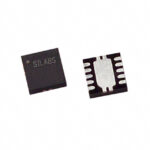 C8051T603-GMR
The activity of extra discounts on wholesale prices is in full swing…
Please fill in your contact information and we will send you the latest wholesale price list.






