 ChipApex | Global Electronic Components Supplier
SEARCH
Search Product
Search Post
— IC芯片 | 连接器 | 传感器 | 被动器件 —
Search productSearch post
— IC芯片 | 连接器 | 传感器 | 被动器件 —
Consult the customer manager about the wholesale price.
consultation hotline:86-132-6715-2157
email:[email protected]
Contact the product manager for consultation. One-stop consultation is available.
Do you want a lower wholesale price? Please send us your inquiry and we will reply immediately.
The CAT3626HV4-T2 is a six-channel LED driver IC manufactured by onsemi, designed for high-efficiency lighting applications. It features an integrated 1x/1.5x fractional charge pump and operates within a supply voltage range of 3 V to 5.5 V. The device provides programmable output currents up to 32 mA per channel with 0.5 mA resolution via an I²C interface. Packaged in a TQFN-16 format, it supports independent current control for paired channels, ensuring precise brightness regulation. Operating temperatures span from -40°C to +85°C, making it suitable for portable electronics requiring stable LED performance.
Verify component authenticity through authorized distribution channels due to potential counterfeit risks. Confirm RoHS compliance status as indicated in official documentation. Check for specific ordering suffixes that may affect packaging or tape-and-reel specifications. Ensure compatibility with existing PCB footprints for the TQFN-16 package before finalizing procurement decisions.
Select this component for designs requiring multi-channel LED control with minimal external passive components. The integrated charge pump eliminates the need for inductors, reducing board space. Consider the 32 mA maximum current limit when sizing LEDs. Verify I²C bus speed requirements against the controller's capabilities to ensure reliable communication during dimming operations.
This part belongs to the CAT3626 family of LED drivers, which are optimized for portable consumer electronics. The HV4 suffix typically denotes specific thermal or electrical characteristics within the series. These drivers are commonly used in smartphones, digital cameras, and handheld devices where space efficiency and battery life are critical design constraints.
Check for direct pin-to-pin replacements within the same manufacturer's portfolio. Verify that alternative parts support the same I²C addressing scheme and current programming resolution. Ensure thermal performance matches the original TQFN-16 package requirements for the intended application environment.
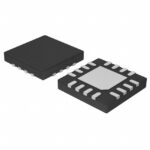 CAT3626HV4-T2
The activity of extra discounts on wholesale prices is in full swing…
Please fill in your contact information and we will send you the latest wholesale price list.





