 ChipApex | Global Electronic Components Supplier
SEARCH
Search Product
Search Post
— IC芯片 | 连接器 | 传感器 | 被动器件 —
Search productSearch post
— IC芯片 | 连接器 | 传感器 | 被动器件 —
Consult the customer manager about the wholesale price.
consultation hotline:86-132-6715-2157
email:[email protected]
Contact the product manager for consultation. One-stop consultation is available.
Do you want a lower wholesale price? Please send us your inquiry and we will reply immediately.
The CD485B is a general-purpose silicon signal diode manufactured by Microsemi, now part of Microchip Technology. It features a single rectifier diode element constructed from silicon material. The device is supplied as an uncased chip die in a DIE-2 package configuration with two terminals. It is designed for robust operation within an operating and storage temperature range of -65°C to +175°C. The junctions are completely protected with silicon dioxide. The component supports standard wire bonding and die attach techniques, excluding solder reflow processes.
Verify the manufacturer designation carefully, as the component is historically associated with Microsemi, which has been acquired by Microchip Technology. Confirm the specific package code DIE-2 and terminal count match your assembly requirements. Ensure that the exclusion of solder reflow compatibility is accounted for in your manufacturing process flow. Check for lead content and RoHS compliance status prior to integration.
Select this component when a ruggedized silicon signal diode capable of withstanding extreme temperatures is required. The uncased die format necessitates specific handling and attachment methods compatible with wire bonding. Consider the voltage ratings relative to the circuit requirements, noting variations across the CD483B/CD485B/CD486B series. Ensure the design accommodates the absence of solder reflow compatibility during assembly.
The CD485B belongs to a family of general-purpose silicon diodes that includes variants such as the CD483B, CD486B, CD645, and CD5194 through CD5196. These components share common construction features like silicon dioxide protection and high-temperature tolerance but differ in peak voltage and current specifications. This series is intended for applications requiring reliable signal rectification under harsh thermal conditions.
Public confirmed substitute part numbers are not available in the provided documentation. Variants within the same series, such as CD483B or CD486B, may offer different electrical characteristics and should be evaluated for functional equivalence before substitution.
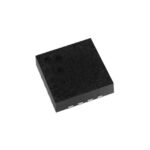 CD485B
The activity of extra discounts on wholesale prices is in full swing…
Please fill in your contact information and we will send you the latest wholesale price list.




