 ChipApex | Global Electronic Components Supplier
SEARCH
Search Product
Search Post
— IC芯片 | 连接器 | 传感器 | 被动器件 —
Search productSearch post
— IC芯片 | 连接器 | 传感器 | 被动器件 —
Consult the customer manager about the wholesale price.
consultation hotline:86-132-6715-2157
email:[email protected]
Contact the product manager for consultation. One-stop consultation is available.
Do you want a lower wholesale price? Please send us your inquiry and we will reply immediately.
The TGS CD4M000000S001 is a through-hole ceramic resonator designed for frequency control applications. It operates at a nominal frequency of 4 MHz and features built-in capacitors with a capacitance value of 30 pF. The component exhibits a tight frequency tolerance of ±0.3% and an equivalent series resistance (ESR) of 20 Ohms. It is rated for operation within a temperature range of -40°C to +85°C. The device utilizes a three-pin configuration housed in a compact package measuring 9.5 mm in length, 4.0 mm in width, and 6.0 mm in height.
Verify the specific pinout configuration and mechanical dimensions against the target PCB footprint prior to integration. Confirm that the 30 pF internal capacitance aligns with the load requirements of the host oscillator circuit. Ensure the selected mounting method accommodates the thermal expansion characteristics defined for the -40°C to +85°C operational range to maintain long-term reliability.
Select this component when a cost-effective, low-profile frequency reference is required for moderate precision applications. The integrated capacitor feature reduces external component count compared to discrete crystal setups. Consider the 20 Ohm ESR specification for impedance matching within the driving circuit. This resonator serves as a suitable alternative to crystals where phase noise sensitivity is less critical than overall system cost and board space constraints.
This ceramic resonator belongs to the standard through-hole component family manufactured by TGS. It is engineered for general-purpose timing applications where stable oscillation is necessary but extreme precision is not mandated. The product line typically includes various frequency options and package styles to support diverse electronic design requirements across consumer and industrial sectors.
Cross-reference compatible parts from other manufacturers offering 4 MHz ceramic resonators with 30 pF internal capacitance and similar physical dimensions. Verify that substitute components meet the same ±0.3% frequency tolerance and operate within the specified temperature range to ensure functional equivalence.
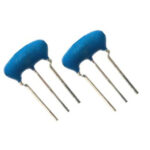 CD4M000000S001
The activity of extra discounts on wholesale prices is in full swing…
Please fill in your contact information and we will send you the latest wholesale price list.





