 ChipApex | Global Electronic Components Supplier

SEARCH
Search Product
Search Post
— IC芯片 | 连接器 | 传感器 | 被动器件 —
Search productSearch post
— IC芯片 | 连接器 | 传感器 | 被动器件 —
Consult the customer manager about the wholesale price.
consultation hotline:86-132-6715-2157
email:[email protected]
Contact the product manager for consultation. One-stop consultation is available.
Do you want a lower wholesale price? Please send us your inquiry and we will reply immediately.
The CD74AC534M96 is an octal D-type flip-flop with 3-state outputs manufactured by Texas Instruments. It belongs to the AC logic series and features a 20-SOIC surface-mount package. The device operates within a supply voltage range of 1.5 V to 5.5 V, with a maximum static current of 4 µA. It supports a clock frequency up to 150 MHz and exhibits a typical propagation delay of 10.5 ns at 5 V with 50 pF load. The component functions as a positive-edge-triggered register with inverted outputs, designed for high-speed data storage applications.
Verify the specific suffix M96 against the manufacturer's official datasheet to confirm the tape-and-reel packaging format intended for automated surface-mount assembly. Ensure that the ordering part number matches the exact package dimensions and pinout specifications required by the target PCB footprint. Cross-reference the RoHS compliance status and moisture sensitivity level ratings prior to final procurement authorization to guarantee compatibility with manufacturing processes.
Select this component when designing systems requiring octal storage elements with tri-state output control for efficient bus management. The AC logic family offers a favorable balance between switching speed and power dissipation compared to older standards. Confirm that the operating voltage range aligns with the system's power rails and that the thermal characteristics support the intended environmental conditions during continuous operation.
This device is part of the broader CD74AC logic family produced by Texas Instruments, which utilizes advanced CMOS technology for enhanced performance. The AC series is engineered to provide faster switching speeds while maintaining lower power consumption relative to previous generations. The CD74AC534 specifically addresses the need for multi-bit storage solutions in complex digital signal processing and communication hardware designs.
The CD74AC534M96 provides inverted outputs, meaning the Q bar state is available at the output pins.
Data is captured at the positive-going transition of the clock input, triggering the flip-flops to update their states accordingly.
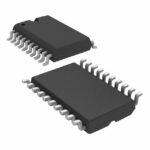 CD74AC534M96

The activity of extra discounts on wholesale prices is in full swing…
Please fill in your contact information and we will send you the latest wholesale price list.





