 ChipApex | Global Electronic Components Supplier

SEARCH
Search Product
Search Post
— IC芯片 | 连接器 | 传感器 | 被动器件 —
Search productSearch post
— IC芯片 | 连接器 | 传感器 | 被动器件 —
Consult the customer manager about the wholesale price.
consultation hotline:86-132-6715-2157
email:[email protected]
Contact the product manager for consultation. One-stop consultation is available.
Do you want a lower wholesale price? Please send us your inquiry and we will reply immediately.
The CD74AC574M96G4 is an octal D-type flip-flop manufactured by Texas Instruments within the AC logic series. It features non-inverting outputs with three-state capability, housed in a 20-pin SOIC package. The device operates on a supply voltage ranging from 2 V to 6 V and supports through-hole or surface-mount installation styles depending on specific variant configurations, though this part typically denotes surface mount. It exhibits a propagation delay of 135 ns and provides high-level and low-level output currents of -24 mA and 24 mA respectively. The component functions reliably across an extended temperature range from -55 °C to +125 °C.
Verify the exact package type and pinout configuration against the official datasheet before integration, as suffix variations can indicate different physical dimensions or lead finishes. Confirm that the AC logic family voltage levels align with the target system's I/O requirements. Ensure thermal management strategies account for the specified maximum operating temperature limits during continuous high-frequency switching operations.
Select this component when designing systems requiring wide voltage operation flexibility combined with high drive current capabilities for long trace lengths. The AC series offers superior speed compared to HC variants while maintaining CMOS compatibility. Consider the three-state feature if multiple devices share common data lines to minimize contention risks and simplify board layout routing for complex digital architectures.
This device belongs to the Texas Instruments CD74AC574 family of octal D-type flip-flops. It serves as a core memory element in sequential logic design, distinct from transparent latches like the 573 series by utilizing edge-triggered state changes. The AC series represents a high-performance silicon gate technology optimized for applications demanding faster switching speeds than standard TTL equivalents while retaining low power dissipation characteristics suitable for battery-operated portable electronics.
SN74AC574DWR
The device utilizes positive-edge triggering, meaning the output state updates to match the D input only at the rising edge of the clock signal.
The outputs enter a high-impedance state when the enable input is deactivated, effectively disconnecting them from the circuit to prevent bus interference.
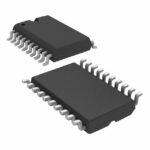 CD74AC574M96G4

The activity of extra discounts on wholesale prices is in full swing…
Please fill in your contact information and we will send you the latest wholesale price list.





